Golfer’s Elbow (Medial Epicondylitis)
Call (817) 382-6789 to have this looked at, or book online with Dr. Knight.
What is Golfer’s Elbow?
Golfer’s Elbow (medial epicondylitis) is a painful form of elbow tendonitis. The forearm muscles (the flexors and the Pronator Teres) responsible for grip, wrist flexion and arm rotation are anchored via tendons to the bony prominence at the inner aspect of the elbow called the medial epicondyle. Tendons are strong, flexible connective tissues that attach muscle to bone allowing movement to occur. Microtears and inflammation to these tendons results in Golfer’s Elbow.
What causes Golfer’s Elbow?
Overuse of the forearm muscles from repetitive actions may result in Golfer’s Elbow. When the forearm muscles contract they place tension on the tendons at the medial epicondyle. Excessive tension from high force or continual repetition can result in damage to these tendons.
Golfer’ elbow may be caused by various activities including chopping wood, using hand tools, and sports like tennis and baseball. However, Medial Epicondylitis is often referred to as Golfer’s Elbow since it is commonly caused by the repetitive motion of a golf swing.
What are the symptoms of Golfer’s Elbow?
Depending on the mechanism of injury, symptoms usually appear gradually over time but can present suddenly from acute injury. The primary symptom is pain to the inner aspect of the elbow during use that may radiate to the forearm, wrist or hand. Mundane activities such as carrying groceries, opening a jar or shaking hands may exacerbate the pain. Some may experience a diminished range of motion, stiffness, weakened grip and swelling.
How is Golfer’s Elbow diagnosed?
A history and review of symptoms is completed prior to assessment. In most cases a definitive diagnosis is obtained through physical examination of the extremity. The physician may order x-rays to rule out fractures. Occasionally an MRI (magnetic resonance imaging) or ultrasound may be used to visualize the tendons and confirm diagnosis.
How is Golfer’s Elbow treated?
Non-surgical
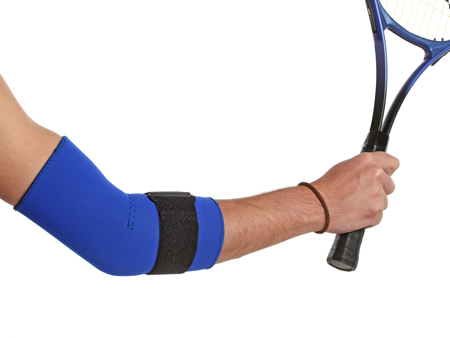
In most instances a conservative approach is warranted. Patient compliance to the prescribed regime is key to recovery. During the initial phase of treatment ice may be applied several times a day to reduce swelling. The affected extremity will require strict rest from any motion that produces symptoms. Lifting, gripping and carrying activities must be minimized to reduce further damage and facilitate the healing process. NSAIDs (nonsteroidal anti-inflammatory drugs) such as aspirin, ibuprofen and naproxen may be taken to alleviate pain and inflammation. Some patients may require a cortisone injection to relieve these symptoms. Special exercises to increase flexibility and strength are part of the rehabilitation phase of treatment.
Surgical
While most clients respond well to conservative treatment about 10% will need surgical intervention to relieve symptoms. If the pain is a result of tendinosis then the affected tissues may be removed in a procedure called tendon debridement. However, Golfer’s elbow is more commonly treated by a medial epicondyle release. This surgery frees the tendon from the medial epicondyle, removes scar tissue that may have formed and re-anchors the tendon to nearby fascia. Post-operatively the elbow is immobilized for a period of time. Exercises and therapy are then employed to restore function and flexibility.
How can Dr. Knight help you with Golfer’s Elbow (Medial Epicondylitis)?
As a lifelong athlete, Dr. Knight knows how hard it can be to sit on the sidelines waiting to heal while others play sports that you love. While it is important not to rush the process of healing, Dr. Knight understands that it is in your best interest to get you back out on the field, or links, or court, as soon as medically advisable, so you can get back to living your active life.
Come visit Dr. Knight, one of the most accomplished and commonly referenced hand specialists in Dallas, Texas. Contact us today to schedule an appointment at our Southlake office or Dallas hand and wrist center.
Animated Videos
Disclaimer
HandAndWristInstitute.com does not offer medical advice. The information presented here is offered for informational purposes only. Read Disclaimer