Mallet Finger: Splints, Treatment, & More
Call (817) 382-6789 to have this looked at, or book online with Dr. Knight.
What is Mallet Finger?
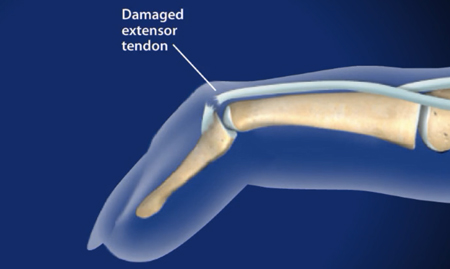
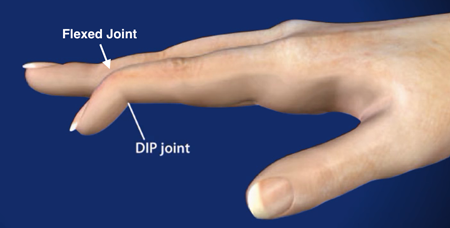
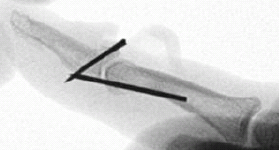
Mallet Finger is a deformity in which the fingertip bends downward at the end joint and can no longer be straightened. Tendons attach the muscles in the forearm to the phalanx (finger bones) permitting movement of the fingers. Extensor tendons, located on the back on the hand, allow the fingers to straighten. While flexor tendons, located on the palmar surface, allow the fingers to bend. When the extensor tendon attached to the distal phalanx (fingertip bone) is damaged the fingertip loses the ability to be straightened on its own.
What causes Mallet Finger?
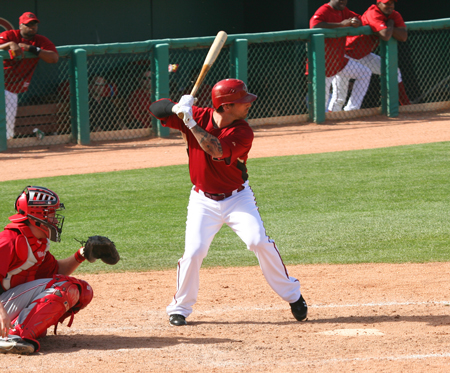
Mallet Finger is sometimes called Baseball Finger as it a common fast ball injury. While routinely seen in athletes, this deformity can also occur from crush injuries, jammed fingers or even a knife wound. Whether the extensor tendon is cut, or the bone is fractured at the site of tendon attachment the result is the same. Any traumatic injury to the fingertip can result in Mallet Finger.
What are the symptoms of Mallet Finger?
The signature finger deformity will be evident at the time of injury. The distal phalanx will not straighten without physical assistance. Various degrees of pain, swelling, discoloration, and tenderness will be present dependent on whether the bone is fractured. If Mallet Finger is suspected, medical attention should be sought within a week of injury.
How is Mallet Finger diagnosed?
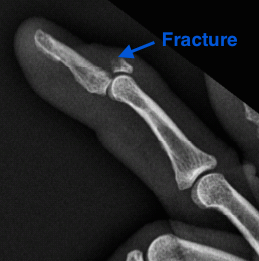
Mallet Finger is easily diagnosed due to its unique presentation. The physician will also complete a thorough history and physical examination of the hand. X-rays will be ordered to assess for the presence and extent of bone fracture. This aids in determining the appropriate treatment plan.
How is Mallet Finger treated?
Non-surgical
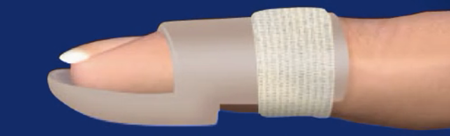
Most cases of Mallet Finger can be treated without surgery, if there are no large bone fractures. A special finger splint may be applied to hold the digit in proper alignment while the tendon heals. The splint is worn continuously for 6 – 8 weeks, then at night for an additional 2 weeks. If the finger does not respond to splinting, then surgery may be indicated.
Surgical
Mallet Finger associated with large fractures or joint damage may require surgical intervention. The surgeon will use tiny pins, wires or screws to repair any fracture(s) allowing the bone to grow back together. In severe cases the joint may be fused straight. The tendon may be repaired with sutures or grafts depending on the extent of damage. Mallet Finger associated with large fractures or joint damage may require surgical intervention. The surgeon will use tiny pins, wires or screws to repair any fracture(s) allowing the bone to grow back together. In severe cases the joint may be fused straight. The tendon may be repaired with sutures or grafts depending on the extent of damage.
How can Dr. Knight help you with Mallet Finger?
Because this injury is not uncommon, Dr. Knight has encountered it many times over his career as a hand surgeon and is well versed in its care and treatment. His experience makes him the best choice you can make to have your Mallet Finger treated and get you back to your life and work.
Dr. Knight welcomes you to any of our Dallas Fort-Worth accessible hand and wrist offices. Dr. Knight is an accomplished hand specialist. Come to our Southlake office or Dallas office today and bring life back to your hands.
Mallet Finger Fact Sheet
| What causes Mallet Finger? | Some causes of Mallet Finger include crush injuries, lacerations, and jammed fingers. |
| Self Treatment for Mallet Finger | Splinting and rest are the msot efective treatments for mallet finger in a home environment. |
| Can I play sports with Mallet Finger? | You can play sports within reason, and at your doctor's discretion, bust if the activity is strenuous enough to negatively effect your recovery, then it is not advised. |
| Why is it called Mallet Finger? | One theory is that mallet finger got its name because the tip of the finger bends and makes the digit look like a hammer. Another is that the jamming often involved in causing the condition can be considered a mallet-like injury. |
| Can Mallet Finger heal on its own? | If it is mild, possibly, but treatment with a doctor is recommended |
Frequently Asked Questions:
Can Mallet Finger heal on its own?
In less severe cases, particularly when the tendon is not completely severed within the finger, it is possible that a mallet finger, with rest and care, can heal itself, but this is not recommended, as the tendons of the finger are very delicate, and without medical intervention, even something as simple as a splint, the likelihood of the injury healing fully or correctly is much smaller.
Will Mallet Finger keep me from playing sports?
Prior to resorting to surgical repair, the most likely course of treatment for Mallet Finger is splinting, and while your doctor will have to make the ultimate decision on when and whether you will be able to return to athletic activity, there are plenty of activities that you can engage in while recovering from a Mallet Finger repair. That being said, depending on the sport you are playing, you may want to take care and be more circumspect about the activities in which you engage. If you are a baseball player, or any other game that involves catching a hard ball, you should be aware that these sports make it far more likely that you will be afflicted by mallet finger in the future, because a jammed finger from an attempted catch is a very common cause of the condition.
How do I know if I have mallet finger?
Mallet Finger is one condition that presents in a very clear and specific manner, and so if you are suffering from the condition, you will be aware at the earliest stages. Other conditions such as boutonniere and swan’s neck deformity also affect the joints of the fingers, and so in their early stages they may resemble mallet finger, but once the distinctive features of each of these conditions becomes apparent, you and your doctor will know which you suffer from.
Why is it called mallet finger?
Mallet Finger is known as several things, and each of these has their own reasoning behind it. Obviously, mallet finger is the most common name for the condition, and it got this name because the finger with the last digit bent down away from the back of the hand makes the finger itself resemble a mallet. Likewise, another name for this condition is Hammer Finger, which comes from the same resemblance to a hammer or mallet. A third name that this condition is known by is Baseball Finger, and this name comes from one of its causes, rather than a resemblance to any tool or playing device. Mallet/Hammer/Baseball Finger is a common affliction among baseball players, because it can happen when the tip of the finger is struck and jammed, often in the act of catching a baseball.
Does a mallet finger hurt?
As with most finger and tendon injuries, mallet finger is accompanied with pain in addition to swelling. The tendon in this case is held in flexion, which puts strain on the joints of the finger and hand, which then resonates throughout the upper extremity.
Videos
Animated Videos
Disclaimer
HandAndWristInstitute.com does not offer medical advice. The information presented here is offered for informational purposes only. Read Disclaimer