A2 Pulley Injury Causes, Symptoms, and Treatments
Call (817) 382-6789 to have this looked at, or book online with Dr. Knight.
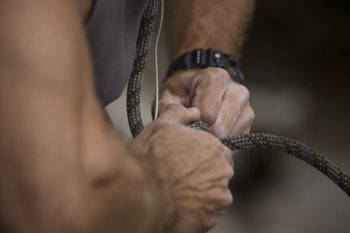
Photo by Adam Bezer licensed under Unsplash
Clearly, the human hand is a complex and useful part of your body. Its intricate skeletal structure and powerful muscles allow you to control your fingers, grasp things, climb, and make all kinds of precise movements. Activities like rock climbing can put a lot of force on your hands, which is why one of the most common climbing injuries is damaged A2 pulley tendons in your fingers. However, there are various ways you can prevent and heal this condition. Read on to explore an overview of the A2 pulley injury and its various causes, symptoms, and treatments.
What Is an A2 Pulley Injury?
The A2 pulley is an essential part of the hand. While the muscles for flexing your fingers start in the forearm, their tendons travel through the wrist, hand, and fingers. Five annular tendon pulleys named A1 through A5 act as ligaments or connective tissue that keep your flexor tendons close to your finger bones. Think of them like eyelets of a fishing rod that keep the flexible “line” of your tendon attached to the rigid “rod” of your bone. Without your pulleys, you wouldn’t be able to bend your fingers, grip small edges, or use force of any kind.
The A1, A3, and A5 pulleys are smaller and located at the joints of your finger. The A2 and A4 are bigger and located in the middle of your proximal and middle phalanx bones. The A2 and A4 pulleys are the most prone to injuries because they’re less flexible than the others. An A2 injury is when the ligament ruptures. As a result, the tendon pulls away from the bone or “bowstrings,” which are the elastic tendon and the bone resembling the shape of a bow. A pulley injury causes loss of normal range of motion and finger strength.
What Are the Causes of A2 Pulley Injuries?
Our soft tissues and muscles have a limited amount of strength and tolerable load, so overloading them can cause ruptures to ligaments, tendons, and other elements. A2 injuries occur when the ligament pulley structure of your hand cannot handle the force being put on it and fails. Sudden or excessive stress on your fingertips or overuse of your pulleys from activities like rock climbing may sprain your A2, often causing a loud pop sound.
Another potential cause of A2 pulley injuries is degenerative conditions in the fingers. For example, the Stenosing Tenosynovitis disorder, also called trigger finger, causes a fibrous nodule to form on the tendon near the tendon sheath. In some situations, the nodule can catch on the edge of the flexor pulleys and impact finger movement and abilities.
Putting a lot of stress on your fingers or using them often means there’s a chance of a pulley injury. This risk can be higher if you work in a profession in which you use your fingers a lot. For example, when a rock climber climbs and hangs from walls, pulls off holds, and grips rocks at certain angles, they put the weight of their entire body or part of it on the muscles in their fingers. Other professionals that can be at risk for a pulley injury include martial arts instructors, massage practitioners, musicians, and surgeons.
A2 Pulley Injury Symptoms
As said before, you might hear a loud “pop” sound if you injure your pulley. You may also feel localized pain and tenderness at a certain site in your finger or fingers. Look out for swelling, redness, and inflammation at the base of your finger. Because your A2 pulley is a key part in allowing your finger to bend, damage to the A2 can significantly impair finger movement. You may feel stiffness and pain when you bend your fingers, put force on them, or try to grip objects.
A2 Pulley Injury Treatment
The treatments for A2 pulley injuries can depend on whether you have a sprain or rupture. While a sprain is a stretch or partial tear of a ligament, muscle, or tendon, a rupture is a complete tear of the ligament. Naturally, a complete rupture is going to require more intensive treatment and a longer healing period than a more simple sprain. In addition, if you’ve injured multiple pulleys at once, you’re more likely to need surgery.
Treatment almost always involves taking a break from the activity that caused the injury, like rock climbing. This allows your tissues to heal itself, and can also be an opportunity to pursue other hobbies or interests in your life.
For most pulley injuries, physical therapy is sufficient. Physical therapy can help build up strength and a range of motion in your damaged fingers. You’ll want to protect your fingers by getting them taped. After two to four weeks, it will probably be necessary to perform functional movements like range of motion exercises. Eventually, you may start using your fingers again, keeping them taped, to regain strength and coordination. For worse injuries, you may need to complete immobilization and use a splint. You’ll later transition to using a thermoplastic pulley ring provided by a doctor.
Surgery for a Pulley Injury
In extreme cases, like multiple ruptures or single ruptures with trauma to muscles and ligaments, it may be necessary to get surgery. In these situations, surgery helps correct bowstringing and re-establish the normal biomechanics of your fingers. This will involve a significant period of immobilization of your finger and a period of months to heal.
Preventing A2 Pulley Injuries
While not exactly a type of treatment, it’s important to try to prevent A2 pulley injuries in the first place. For example, the angle of your joints when you’re climbing, gripping things, and putting weight on your fingers is important. By avoiding crimp grip and using an open hand grip, you can balance your weight and avoid overloading your pulleys. If you start feeling pain in your fingers, call a doctor right away to figure out what’s happening.
The A2 pulley injuries are most common for rock climbers, but there are many ways to both prevent and treat this condition so you can heal and get back to doing what you love. If you have any questions, contact us today and we here at the Hand and Wrist Institute will be happy to help you.