Displaced vs. Non-Displaced Fractures
Call (817) 382-6789 to have this looked at, or book online with Dr. Knight.
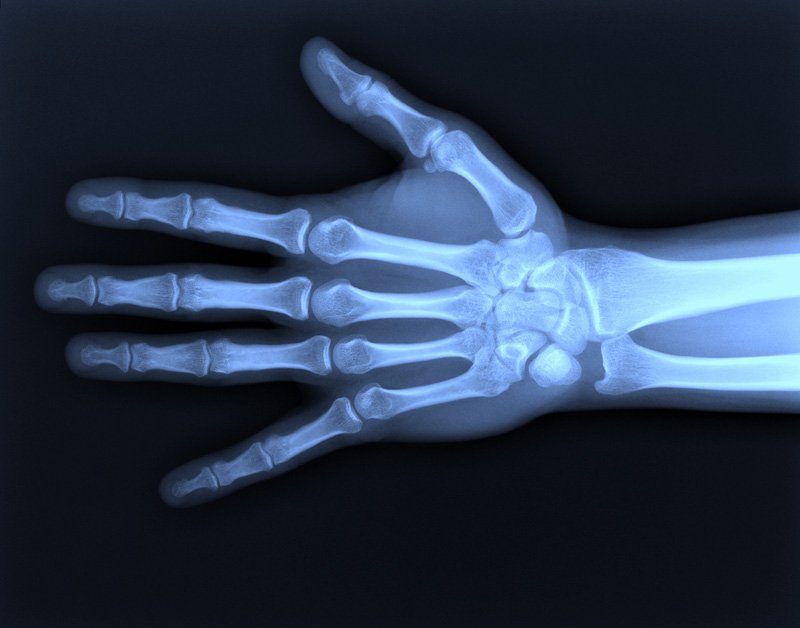
Fractures come in many forms, from simple fractures such as stress fractures and nondisplaced fractures to more complex breaks like comminuted and displaced fractures. The moment of impact upon injury generally makes a difference in the type of fracture that takes place.
Displaced and nondisplaced fractures differ in the breakage of the bone. Whereas in nondisplaced fractures the bone does not always crack all the way through, displaced fractures are out of alignment. When the bones are out of alignment, surgery is more likely.
Broken bones are generally placed in four categories: displaced, nondisplaced, open, and closed. These categories are accompanied by several subtypes of breaks according to the injury. Hand, wrist, and arm fractures are common at all ages, but the seriousness may vary. Below displaced and nondisplaced are explained.
Displaced fractures
Displaced fractures are generally more complex because the bones are out of alignment, or they may be in several pieces. The broken bone snaps out of place, and the broken ends do not line up correctly. These fractures can be extremely painful because it may be visible through the skin; a broken wrist from a hard fall can shove the broken radius closer to your body, resulting in an oblong section of bone poking your skin with brute force.
Displaced fractures can be open or closed, simply meaning that the skin is either intact or broken through. If the bone has punctured the skin, you need to seek medical attention right away. An open fracture may break the skin and then recede into the body, so it is important to check your wrist or arm for blood.
As humans age, our bones become more susceptible to breakage, although fractures are more common in children. Older adults have brittle bones and a fall can be much more detrimental. A fall can result in a comminuted fracture due to the bones shattering into several pieces. This is much more serious in an elderly adult than a child who should be able to bounce back relatively quickly.
Depending on the location and subtype, fractures can be extremely serious and have dangerous complications if not treated properly. Damage to the blood vessels or nerves can occur, or an infection of the surrounding tissue. Even worse, osteomyelitis–a bone infection, can occur. A broken bone will heal, but complications from not seeking medical attention right away may not. It is always best to call a doctor or go to the nearest emergency room if you suspect you have broken your arm or wrist.
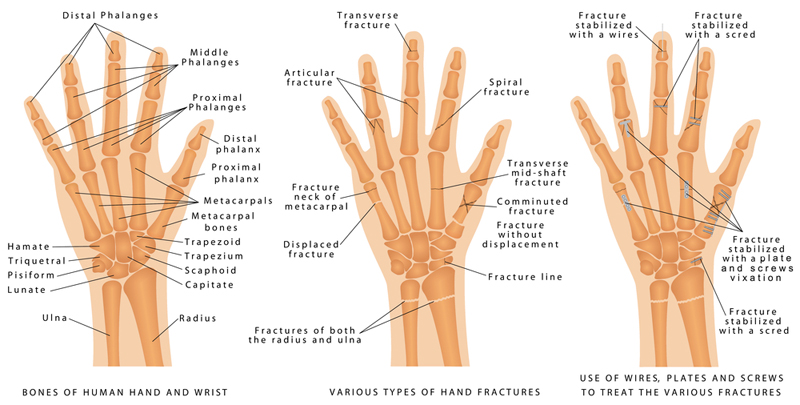
Nondisplaced fractures
Nondisplaced fractures are often closed and do not move out of alignment. They are sometimes referred to as incomplete fractures because the bone cracks but does not break all the way through. Broken bones do not always crack through the side, they can crack parallel to the bone’s long axis, such as in linear fractures.
Children oftentimes suffer from broken bones and are able to heal quickly due to their age. Greenstick fractures–or a fracture where the bone is bent but the break is incomplete–are common in children. Children’s bones are softer and more flexible than an adult’s bones, which makes them more susceptible to this injury. They are referred to as greenstick fractures because it resembles when you are trying to break a small green branch on a tree and it bends more than it breaks.
Distal radius fractures are very common injuries in both children and adults. They usually occur from falling on an outstretched hand, where the hand naturally wants to brace itself for impact. This can happen in a fall, playing sports, or in a car accident. The bone near the wrist breaks, and immobilization is important. The break can be displaced or nondisplaced, which will affect treatment. Whether the ulna is also broken or if the median nerve is painful plays a pivotal role in treatment options, which can include a cast or surgery. If it is nondisplaced, a cast is usually enough, and no other treatment is needed other than physical therapy.
Physical therapy is an important step in your recovery. Without it, you run the risk of your joint stiffening which can have lifelong complications. Your wrist may be in a cast for about six weeks, which is more than enough time for muscle atrophy and overall weakness. When the cast is removed, your arm will look skeletal, which is perfectly normal. In physical therapy, you will have the proper tools to regain strength in your wrist and return to normal. After your therapy is complete, you can still perform your strengthening exercises to continuously improve your range of motion.
Conclusion
Broken bones are common injuries. In fact, most people will suffer from two broken bones throughout their life. Distal radius fractures are among the most common injury, affecting children and adults, and can be displaced or nondisplaced. Displaced fractures will likely require surgery because the bones are unstable while nondisplaced fractures normally only need to be immobilized in a cast for six weeks to properly heal. Both treatment options require physical therapy to regain strength and full range of motion, and prevent joint stiffness.
Your age upon injury can play a role in the severity of the injury. Children are more likely to suffer from nondisplaced fractures such as greenstick fractures where the bone is bent but cracks only partway through, while older adults are more likely to take much longer to heal due to their brittle bones. Surgery may be required in more serious breaks where an incision is made on your wrist and metal plates and screws are set in the bone to keep the bones in place.
Whether you have a displaced or nondisplaced fracture in your arm or wrist, you should seek medical attention straight away. There you will be evaluated, x-rays will be taken, and your doctor will prepare the best plan of action for a full recovery. Even in more serious cases, a full recovery is possible with the proper treatment.