How Long Does It Typically Take For A Wrist Sprain To Heal?
Call (817) 382-6789 to have this looked at, or book online with Dr. Knight.
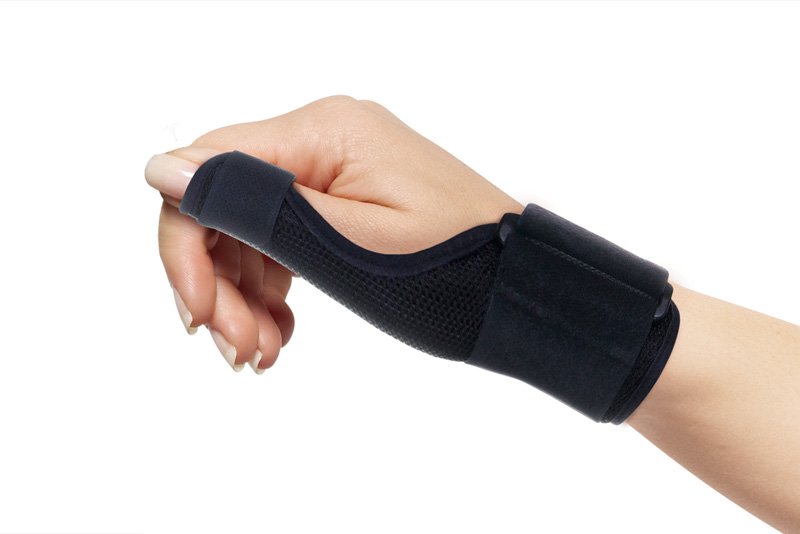
A sprained wrist occurs when there is an injury to its ligaments. The ligaments are strong fibrous tissues that connect bones to other bones inside a joint. The wrist, although it is thought to have one joint that connects it to the forearm, contains several joints that link 15 separate bones. The ligaments in the wrist help stabilize the joints and maintain the bones in a proper position.
Ligaments can be torn by any extreme twist, bend, or impact that suddenly forces the wrist into a position beyond its normal range of motion. It can range from a stretch or tiny tear in the fibers that make up the ligament to a complete tear through the ligament or its attachment to the bone. Due to this, sprains are graded based on the degree of injury. The grade determines the potential recovery time of a sprain.
Grades of Wrist Sprains
Grade 1 – a mild injury in which the ligaments are stretched, have microscopic tears, or are not torn at all.
Grade 2– moderate injury in which some ligaments may be partially torn. There may also be partial loss of function.
Grade 3– severe injury in which one or more ligaments have pulled from their attachment to the bone or have been completely torn. This type of sprain requires medical or potentially surgical care. There is a possibility that if the ligament pulled off the bone, it took a small chip of the bone with it. This is known as an avulsion fracture.
Causes
A wrist sprain happens when the wrist is bent or twisted forcefully, such as caused by a fall onto an outstretched hand. That is the most common way for the sprain to happen. A fall of that sort can happen during everyday activities or work, but it is considered rare. Here are some common situations in which sprains happen:
- Weather conditions such as ice storms or after snowfalls.
- Playing sports including football, basketball, ice hockey, baseball, and volleyball, among others. Sprains and other injuries to the wrist account for 3-9% of all sports injuries.
- Skiing can result in a sprain if the skier falls while still gripping a ski pole or having the pole strapped to the hand.
- Platform diving can result in a sprain if the wrist absorbs a forceful impact as the diver hits the water.
Symptoms
A wrist sprain may provoke mild or severe pain, depending on its grade. Alongside pain, some symptoms include:
- A feeling of popping or tearing inside the wrist
- A feeling of warmth around the wrist
- Tenderness to touch
- Bruising
- Swelling
- Change in wrist shape
Diagnosis
When a sprain is mild, you can wait it out for a few days. However, if there is no improvement, the doctor needs to evaluate it. Proper diagnosis and treatment of wrist injuries are necessary to avoid long-term problems, including chronic pain, stiffness, and arthritis. A mild wrist sprain that does not improve could end up being a type of fracture that requires treatment.
During a visit with your doctor, you will need to describe in detail how you injured your wrist and what your symptoms are. When explaining how the injury happened, include as many details as you can, such as the position of the wrist when you injured it. Through this medical examination, the following will be included:
- Medical history, general health, and previous injuries to the wrist.
- Careful examination of the wrist to pinpoint where it hurts and how it moves.
- The arm and hand will be examined to rule out any other injuries.
Imaging Tests
If your physical exam suggests there is a severe sprain or fractured bone, your doctor may order wrist X-rays. The X-ray can help the doctor rule out a broken bone, and while it will not show a torn ligament, it can suggest it if the wrist bones do not line up correctly.
Furthermore, your doctor may order additional tests if the X-rays appear normal, but the symptoms persist. Other tests include magnetic resonance imaging (MRI) or a computed tomography (CT) scan.
Treatment
Treatment for a wrist sprain will depend on its severity. For a mild sprain, the RICE rule:
- Rest the joint, and try not to use your wrist for at least 48 hours.
- Ice the injured area immediately after the injury to reduce swelling. Use cold packs for 20 minutes at a time, several times a day. Do not apply ice directly to the skin.
- Compress the swelling with an elastic bandage.
- Elevate the injured area as often as possible with your wrist raised higher than your heart.
Additionally, your doctor also may suggest a nonsteroidal anti-inflammatory drug (NSAID), such as ibuprofen (Advil, Motrin, and others), to relieve pain and ease swelling. However, if pain and swelling persist for more than 48 hours, see a doctor.
For moderate sprains, the wrist may be immobilized in a splint or light cast for seven to 10 days. If you have a significant wrist injury, you will need physical therapy as soon as symptoms allow because immobilization may cause some stiffness in your wrist.
For severe sprains, may require surgery to repair the fully torn ligament. Surgery involves reconnecting the ligament to the bone or using a tendon graft to reconstruct the injured ligament. Surgery is followed by a period of rehabilitation that includes exercises to strengthen your wrist and restore range of motion.
Expected Recovery Duration
The time for recovery varies based on the severity. For mild sprains, improvement can be seen within a week. For moderate sprains, since you will be wearing a splint as needed until symptoms improve, it may take up to 6 weeks. Severe sprains can take several weeks to heal completely. Although the ligament usually heals in 8 to 12 weeks, it can take from 6 to 12 months for a full recovery.