Nail Bed Injuries: Types, Causes & Treatment
Call (817) 382-6789 to have this looked at, or book online with Dr. Knight.
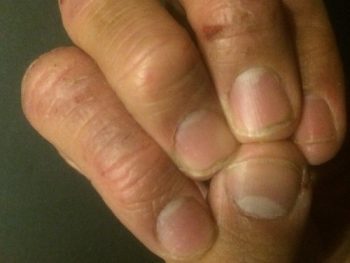
“Hand-Finger-Nail atari breakout” by strowberrycake licensed under CC BY-SA 2.0
Your nail bed is the skin underneath your toenails and fingernails. These areas are quite susceptible to injuries, including injuries to the nail itself that affect the underlying area of the nail bed. Sometimes these injuries are minor and can be treated at home. Other times an injury requires prompt medical attention to save the nail or ensure that a traumatized, punctured, or cut nail heals appropriately, or a lost nail grows back.
When Is It Appropriate to Care for the Injury at Home?
If your nail bed injury isn’t too severe, you can treat a minor nail bed injury at home by following these steps:
- Apply gentle compression to the injured area to reduce throbbing.
- Carefully wash the injured area with a gentle, fragrance-free soap.
- If there’s an open wound, bandage the area of your injury gently.
- Elevate your injured foot or hand.
- Take an over-the-counter NSAID, such as ibuprofen, naproxen, or aspirin for pain.
- Apply an ice pack for 20 minutes, then take a break. You may re-apply for another 20 minutes again later.
When Should You See a Doctor for a Nail Bed Injury?
You should see a doctor instead if:
- You develop a fever.
- You have a deep cut.
- If you’re wearing jewelry and find it difficult to remove from the injured finger or toe.
- There’s pooling blood covering more than half of the nail bed.
- You’re experiencing severe pain from the injury.
- You have bleeding that doesn’t stop easily.
- Your nail has detached from the nail bed or is cut or torn.
- The injury has caused your finger or toe to be deformed.
If you’re at all uncertain whether your nail bed injury requires treatment, you should consult with a doctor. If your injury is serious and requires immediate attention, you should be transported to the nearest hospital’s emergency room. Otherwise, reach out to a hand and foot specialist. If you’re in the Chicagoland area, Dr. John Knight of The Hand & Wrist Institute can offer a professional diagnosis and treatment for injuries involving fingernail nail beds.
Different Types of Nail Bed Injuries
There are different types of nail bed injuries, including subungual hematomas, lacerations, and avulsions.
Subungual Hematomas
A subungual hematoma is blood trapped under the nail after trauma. It forms due to the blood vessels under the nail bed leaking and creating what looks like a bruise due to the pooled blood. A subungual hematoma is most likely to occur if the toes or fingers have experienced a serious impact or been crushed. Though less common, shoes that don’t fit right can also cause small blood vessel leakage due to excessive pressure on the toes. The hematoma may change color when the blood clots after injury, often going from purple or red to black or brown. You may notice that these injuries get progressively more painful as time goes on.
Nail Bed Lacerations
A nail bed can also be injured due to a laceration or cut piercing the nail and the underlying nail bed. These kinds of injuries can cause larger subungual hematomas, so more severe pooling of blood can occur under the nail, causing more significant pressure and more intense pain.
Nail Bed Avulsions
An avulsion occurs when the nail, and part of the nail bed, detaches either partially or entirely. The cause of a nail bed avulsion is usually due to a smashed nail or enduring an impact injury. Avulsions tend to be severely painful.
What Are Some Common Causes of Nail Bed Injuries?
Toenails and toenail beds can be injured through sports, particularly in sports involving kicking, such as soccer and football. Even certain types of exercise can pose risks, such as weightlifting, where it’s possible to drop a weight on your foot. Martial arts, boxing, and kickboxing can also lead to injuries of the feet or hands. On-the-job accidents involving feet or hands are also a leading cause of nail bed injuries. Construction, assembly line, or other factory work all have a host of hazards. Objects can be dropped on one’s foot, and fingers can get caught in machinery.
How Are Nail Bed Injuries Treated?
Minor nail bed injuries, such as subungual hematomas may heal without treatment. Medical treatment ensures that the nail bed heals well to allow the new nail to grow.
In the case of a serious subungual hematoma, a doctor may make a tiny hole in the nail to drain the blood that’s pooling under the nail. This procedure is called trephination. This method won’t be used if the nail itself is damaged. In that case, the doctor might remove the nail entirely to fix the nail bed and the matrix, which is the area located at the base of the nail, which grows new nails.
Likewise, if the nail is torn or damaged, the doctor may opt to remove it entirely and repair the nail bed to prepare for proper regrowth of the nail. This method may also be used in the case of a toe or finger fracture. In the case of a laceration, the doctor will stitch it up to repair it and, if possible, reattach the nail to provide coverage and protection while new nail forms beneath.
Avulsions may be treated the same way, but if the nail is too damaged to be used while a new nail grows in, the doctor may attach a synthetic nail temporarily. As the new nail grows, the artificial nail will be pushed forward until it can be removed. More severe cases of avulsion may require reconstructive surgery.
In all cases, you may need antibiotics to prevent infection. Your doctor may also request an X-ray of the injured toe or finger to ensure you don’t have a fracture and check that you have an up-to-date tetanus shot.
Healing times can vary with the severity of the injury, but it often takes six to nine months to heal a nail and nail bed fully.
Contact the Hand and Wrist Institute Today!
If you or someone you love has suffered a fingernail bed injury, and you’d like to have a specialist take a look at it, reach out to Dr. Knight at the Hand and Wrist Institute. Dr. Knight has the expertise and experience to diagnose and treat various injuries and conditions of the hand, wrist, and elbow. Contact a Hand and Wrist Institute team member at (817) 382-6789 or via our secure online messaging systemto schedule a consultation today.