Pronator Teres Syndrome vs. Carpal Tunnel
Call (817) 382-6789 to have this looked at, or book online with Dr. Knight.
If you’re experiencing unusual symptoms in your wrist, hand, or fingers, such as numbness, tingling, or weakness, your first thought might be carpal tunnel syndrome, as it’s one of the most well-known conditions that affects the wrist, hand, and fingers. However, there’s a lesser-known condition called Pronator Teres Syndrome. Even doctors may confuse the two at first, without a more thorough investigation. What is the difference between pronator teres syndrome vs. carpal tunnel?
What Is Carpal Tunnel Syndrome?
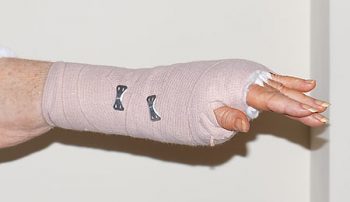
Image via Flickr by Birdies100
Your carpal tunnel is a narrow pathway on the palm side of your hand that your ligaments and bones surround. Carpal tunnel is also referred to as median nerve compression. The median nerve originates in your spinal cord, then goes down the front of your arm and forearm, and into your hands and fingers. Carpal tunnel syndrome arises when your median nerve becomes compressed, meaning there’s pressure on your median nerve. This compression affects the sensation and function of your wrist, hand, and fingers.
What are the Symptoms of Carpal Tunnel Syndrome?
The symptoms of carpal tunnel syndrome can include numbness, tingling, and weakness in the hand and arm. Symptoms usually begin gradually, with the most tingling and numbness affecting the thumb, index, middle and ring finger and occasionally the little finger. You may feel a sense of electric shock through your thumb and the affected fingers. Sensations can also travel from your wrist up to your arm. They’re most likely to occur while sleeping, holding a phone, a steering wheel, typing, using a mouse or touchpad, and writing.
Sufferers of carpal tunnel syndrome may attempt to stop the numbness and tingling or shock-like sensations by shaking out their hands, but in time the numbness can become constant as the syndrome progresses. Another symptom is weakness. Carpal tunnel syndrome can lead to weakness when picking up, holding, or grasping objects. It can also lead to dropping things because your hand goes numb or your thumb’s pinching muscle becomes weak, as the median nerve controls both.
How Is Carpal Tunnel Syndrome Diagnosed?
Your doctor will go over a history of your symptoms, look for patterns, and perform a physical exam. Your doctor will test the feeling in your fingers and the strength of the muscles in your hand. The doctor will manually bend your wrist, tap on the area of your median nerve, or just press on it, as it’s likely to trigger your symptoms. X-rays are sometimes ordered, but only to rule out other causes.
Two other diagnostic tests are the main ones used. One test is electromyography, which measures small electrical discharges produced by your muscles. A thin needle electrode is inserted to observe electrical activity when the muscles are contracting and when they’re at rest. This test reveals damage to the muscles controlled by the median nerve. The other test is a nerve conduction study, a variation on electromyography. A small shock to your median nerve is passed through two electrodes taped to your skin to see if electrical impulses are slowed within the carpal tunnel.
What Is Pronator Teres Syndrome?
Pronator teres syndrome (PTS) differs from carpal tunnel syndrome as it occurs when the median nerve is compressed in the upper forearm rather than in the wrist and hand. When the median nerve is affected in the upper forearm, it becomes entrapped around the elbow and upper forearm, causing a range of symptoms. The symptoms of PTS tend to be the most bothersome when attempting to rotate your palms. The symptoms are noticeable when turning your palms from upward to downward toward the floor.
What Are the Symptoms of Pronator Teres Syndrome?
Here are some of the symptoms you may experience if you have PTS:
- Pain in the forearm, palm, fingers, or thumb.
- A tingling sensation in your forearm, palm, fingers, or thumb.
- Numbness in your forearm, palm, fingers, or thumb.
- Weakness in the forearm, wrist, fingers, or thumb muscles.
- An aching sensation in your forearm and tenderness when pressing on the pronator teres muscle.
Differences Between Carpal Tunnel Syndrome and Pronator Teres Syndrome
One indication that you have pronator teres syndrome instead of carpal tunnel syndrome is that there are no symptoms produced when tapping the median nerve at the wrist or flexing the wrist with PTS. While weakness can occur in the thenar muscles with both conditions, PTS can also cause thumb and index finger flexion weakness. Another difference is that carpal tunnel symptoms tend to be exacerbated at night, making no difference in PTS.
The Role of Repetitive Motion in Work, Sports, or Hobbies
Since both conditions can be caused and worsened by repetitive motion, your lifestyle and the type of work you perform will be considered when determining which syndrome you may have, if you have either, and not another unrelated condition. For example, in pronator teres syndrome, specific vocations and sports put one at higher risk for the syndrome. For example, it can affect carpenters and mechanics, as both jobs involve using one’s forearms and rotating one’s palms while grasping objects.
Other susceptible people engage in sports such as weight lifting, rowing, and racket sports. Women over 40 are more prone to suffer from PTS as well. In the case of carpal tunnel syndrome, those at risk include factory assembly line workers, farmworkers, fishers, knitters, tailors, homemakers, janitors, butchers, gardeners, painters, musicians, data entry workers, and cashiers.
Differences in Treatment
While both syndromes involve compression of the median nerve, they have marked differences in symptomatology, causes, severity, and treatment. Carpal tunnel syndrome tends to be progressive and may require surgery. Pronator teres syndrome can usually be alleviated by more conservative treatments like rest, limiting repetitive motion, and anti-inflammatory medications, such as NSAIDs.
Contact The Hand and Wrist Institute Today!
To diagnose pronator teres syndrome or carpal tunnel syndrome, or any other disorder involving the hand, wrist, fingers, or forearm, visit the knowledgeable team at the Hand and Wrist Institute. Dr. Knight is a leading carpal tunnel syndrome doctor in Dallas. You can reach us at (817) 382-6789 or via our convenient and secure online messaging system.