Ski Season 2023: Common Hand and Wrist Injuries and How to Prevent Them
Call (817) 382-6789 to have this looked at, or book online with Dr. Knight.
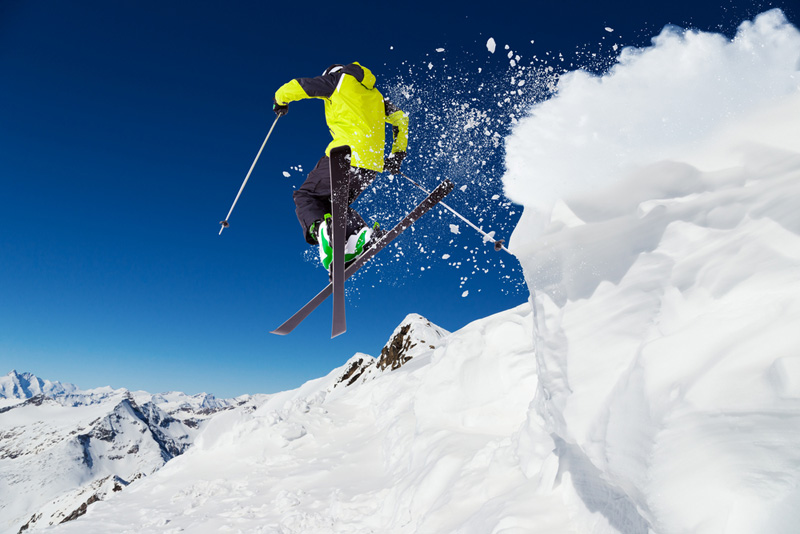
With Winter officially underway, skiers and snowboarders will be flocking to the slopes to revisit familiar trails and blaze new ones. If you’re one of them, you might already know that both sports are associated with many upper extremity injuries. Fortunately, there are steps you can take to prevent injury and ensure that no fresh powder is wasted this season
Common Injuries
Generally speaking, snowboarders are at a greater risk for upper extremity injuries, while skiers have more lower extremity injuries. A plethora of studies have confirmed this finding (Matsumoto et al 2002, Davidson and Laliotis 1996, Coury et al 2013, Owens et al 2018, Sasaki et al 1999, Kim et al 2012), with snowboarding falls more often being awkwardly braced by the upper body.
In Matsumoto’s study – to give a broad idea of injury distribution – upper extremity injuries accounted for 40.1% of snowboarding injuries but only 16.6% of skiing injuries. Let’s break down the most common:
Hand and Wrist Fractures
Perhaps unsurprisingly, fractures comprise the majority of snowboarding injuries, usually resulting from high impact falls or collisions. For example, in one study (Idzikowski et al 2000), 78% of all wrist injuries and 50% of all hand injuries from snowboarding were fractures.
Of course, the complex anatomies of the hand and wrist do present many possible places for fracture – the two forearm bones extending into the wrist (ulnar and radius), the eight carpal bones which make up the joint itself, the bones of the hand (metacarpals), and the bones of the fingers (phalanges) are all at risk. The most commonly fractured include the radius (e.g., a distal radius fracture), the scaphoid (commonly mistaken for a wrist sprain), and the metacarpals.
Typically, a broken bone is accompanied by a cracking noise. Regardless of severity, there will likely be some swelling, bruising, and pain. Treatment options range from immobilization or casting for several weeks to surgery – e.g., if a bone protrudes from the skin, a clean break requires pins or screws, or there is any damage to nerves/blood vessels.
Sprains
Another common injury for both snowboarders and skiers, sprains are an overstretching or tearing of a ligament causing pain, swelling, bruising, and weakness. They can occur in any joint, though the wrist is very common among skiers and snowboarders.
Many sprains are mild and can be treated with ice, rest, elevation, and compression. Only in the most major of cases, typified by extreme pain, swelling, and loss of joint stability, will surgery be required to repair a torn ligament.
Notably, wrist sprains and breaks can sometimes be difficult to differentiate. If you are unsure which of the two your injury is, I encourage you to read our previous article: Wrist Sprain or Break? How to Tell and What to Do. Of course, in severe cases, it’s advisable to visit an urgent care, emergency room, or your local specialist for a complete and accurate diagnosis.
Gamekeeper’s Thumb (Skier’s Thumb)
Accounting for up to 80% of upper extremity injuries in skiers (but very few of snowboarding injuries) are sprains of the ulnar collateral ligament (UCL) of the thumb – also known as a skier’s or gatekeeper’s thumb.
The UCL runs along the inside of the thumb, stabilizing the base joint and preventing the digit from bending outward from the hand. When a skier falls, their pole can get caught between their thumb and the ground as they attempt to brace themselves, forcing the thumb away from the hand and injuring the ligament – hence the moniker “skier’s thumb”.
Common symptoms mirror those of other sprains – redness, tenderness, an unstable joint, and reduced functionality – as do treatments. For severe damage, if the ligament is partially or completely torn, a surgeon can reconnect the ligament to bones using anchors, screws or pins. If surgery is needed, you’ll be in a cast for at least 6-12 weeks with a period of physical therapy and rehabilitation prescribed by your surgeon before you can return to the slopes.
Joint Dislocations
Dislocations refer to an abnormal separation in a joint – whether that be the wrist, elbow, or shoulder. Coming in as the third most common injury among snowboarders behind fractures and sprains, one study (Idzikowski et al 2000) found that dislocations accounted for nearly 10% of upper extremity injuries, the majority of which were in the shoulder. That said, dislocations or fracture dislocations of the carpal bones in the wrist itself have been found to account for 2% of wrist injuries among snowboarders.
Dislocated joints may be immovable and appear visibly deformed or swollen. Patients should seek medical attention immediately for a suspected dislocation.
Though some dislocations can be treated non-surgically – e.g., “popping” the shoulder back into place – the standard of care for many wrist dislocations is operative intervention. After 3-6 weeks of casting, a rehabilitation program can begin, and return to sport typically occurs after 6-12 months.
Protection and Prevention
There are many ways to reduce risk on the slopes. Some that I recommend:
- Get equipment checked. The best way to prevent injury from faulty equipment is to get a pre-season tune-up at a local shop or have someone with significant experience review your gear.
- Warm up and stretch. Recommended for any athletic activity, snowboarding and skiing included.
- Wear protective gear. The use of wrist guards has been shown to significantly reduce the risk of wrist injury, wrist fracture, and wrist sprain by upwards of 50% (Helmig et al 2018). Some wrist/elbow attachments for ski poles also reduce risk of injury.
- Let go of the ski pole when falling. Though no one likes trudging up the hill to retrieve a lost pole, it is certainly better than risking Skier’s Thumb in an awkward fall.
- Try to avoid awkward or unnecessary bracing with your hand and outstretched arms. Far and away the most common reason for injury, one study (Idzikowski et al 2000) reported that 92% of snowboarding injuries were the result of a fall.
- Get in shape. Maintaining an active lifestyle out of season can help reduce the risk of injury once snow starts to fall.
- Be aware of ski patrol. Although this won’t help prevent injury, knowing the fastest way to get ahold of ski patrol in case of an emergency can save valuable time.
- Avoid risky behavior. Skiing or snowboarding while intoxicated places yourself, as well as others on the mountain, at a much greater risk.
Citations
- Matsumoto, K., et al. (November 2002). Upper extremity injuries in snowboarding and skiing: a comparative study. Retrieved from https://www.ncbi.nlm.nih.gov/pubmed/12466690
- Davidson, T.M. and Laliotis A.T. (March 1996). Snowboarding injuries, a four-year study with comparison with alpine ski injuries. https://www.ncbi.nlm.nih.gov/pmc/articles/PMC1303417/
- Coury, T., et al. (December 2013). Injury Patterns in Recreational Alpine Skiing and Snowboarding at a Mountainside Clinic. Retrieved from https://www.sciencedirect.com/science/article/abs/pii/S1080603213001646
- Sasaki, K., et al. (June 1999). Snowboarder’s wrist: its severity compared with Alpine skiing. Retrieved from https://www.ncbi.nlm.nih.gov/pubmed/10372625
- Kim, S., et al. (January 20, 2012). Snowboarding Injuries: Trends Over Time and Comparisons with Alpine Skiing Injuries. Retrieved from https://journals.sagepub.com/doi/full/10.1177/0363546511433279
- Owens, B.D., et al. (January 1, 2018). Comprehensive Review of Skiing and Snowboarding Injuries. Retrieved from https://journals.lww.com/jaaos/Abstract/2018/01010/Comprehensive_Review_of_Skiing_and_Snowboarding.4.aspx
- Idzikowski, J.R., et al. (November 2000). Upper extremity snowboarding injuries. Ten-year results from the Colorado snowboard injury survey. Retrieved from https://www.ncbi.nlm.nih.gov/pubmed/11101105
- Leversedge, F. J. (April 2018). Wrist Sprains. Retrieved from https://orthoinfo.aaos.org/en/diseases–conditions/wrist-sprains/
- Broken wrist (December 2018). Retrieved from https://www.mayoclinic.org/diseases-conditions/broken-wrist/symptoms-causes/syc-20353169
- Sprained Thumb. (n.d.). Retrieved from https://orthoinfo.aaos.org/en/diseases–conditions/sprained-thumb
- Dislocation (September 17, 2019). Retrieved from https://www.mayoclinic.org/diseases-conditions/dislocation/symptoms-causes/syc-20354113
- Ski and Snowboard Injuries (n.d.). Retrieved from https://handcare.assh.org/Anatomy/Details-Page/articleId/39426
- Ogawa H., et al. (February 18, 2011). Glenohumeral dislocations in snowboarding and skiing. Retrieved from https://www.ncbi.nlm.nih.gov/pubmed/21333289/
- Helmig K., et al. (October 11, 2018). Management of injuries in snowboarders: rehabilitation and return to activity. Retrieved from https://www.ncbi.nlm.nih.gov/pmc/articles/PMC6188004/