Swan Neck Deformity Surgery in Dallas
Call (817) 382-6789 to have this looked at, or book online with Dr. Knight.
Despite its name, swan neck deformity has nothing to do with the neck, it’s actually a condition that affects the natural alignment and movement of the fingers. It can cause even the simplest tasks, like gripping or typing, to become a challenge. Understanding what causes it and how it’s treated can help you take the first step toward restoring normal hand function.
What Is Swan Neck Deformity?
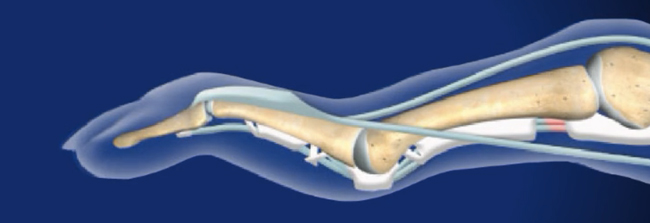
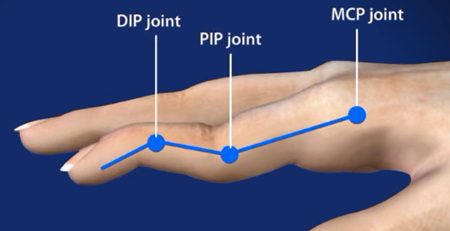
Swan neck deformity is a structural condition that changes how the finger joints are positioned and move together. It happens when the middle joint of the finger (proximal interphalangeal, or PIP joint) bends backward beyond its normal range, while the fingertip joint (the distal interphalangeal, or DIP joint) bends downward. This creates a distinctive curved shape that resembles a swan’s neck.
Although the appearance is noticeable, the condition is really a problem of joint imbalance. Our fingers rely on the precise coordination of tendons, ligaments, and surrounding tissues to move smoothly. When that balance is disrupted, the joints can no longer work in harmony, leading to abnormal positioning.
This condition can develop gradually over time or appear soon after injury. Studies show that certain finger injuries can lead to this deformity over a period of about two monthsif the joint mechanics aren’t properly restored.
Common Causes of Swan Neck Deformity
Each finger relies on what’s called the “extensor mechanism,” which is a coordinated system of tendons, ligaments, and muscles that act like small pulleys to bend and straighten the joints. If any part of this system is weakened or damaged, the forces across the joints become uneven. Over time, the finger may gradually shift out of alignment.
Various types of arthritis of the hand, including rheumatoid arthritis or psoriatic arthritis, are common culprits. These conditions can damage soft tissues over time, thereby weakening the structures that stabilize the joints. Research shows that swan neck deformity is seen in up to 50% of patients with rheumatoid arthritis, in particular.
Other disorders that affect the connective tissue, including lupus and scleroderma (a condition that causes the skin and connective tissues to harden), can have a similar effect through reductions in tissue strength and flexibility. Neurological conditions that cause muscle tightness or involuntary contractions, such as cerebral palsy or traumatic brain injury (TBI), are also known causes.
For some people, swan neck deformity can develop after injuries like sprains, fractures, or tendon injuries if damage to key stabilizing structures shifts the forces acting on the joint. This can happen because if one joint loses support, others often compensate, leading to a chain reaction that progresses over time.
Recognizing the Symptoms: More Than Just Appearance
Swan neck deformity causes a distinct shape where the finger appears “stuck” in an S-shaped curve. This unnatural positioning can interfere with how the finger moves and functions during simple, everyday tasks.
In the early stages, symptoms may be mild or occasional. However, over time, they can become more noticeable and limiting as the joint imbalance progresses. Common signs and symptoms include:
- Difficulty bending the middle joint of the finger
- A snapping or catching sensation during movement
- Stiffness that may worsen over time
- Pain or discomfort when using the hand
- Trouble gripping, pinching, or performing other fine motor tasks
As the condition advances, the finger may become increasingly stiff, making it harder to correct the position even with effort. In long-standing cases, joint stiffness may become permanent, and hand function may decline significantly. Swan neck deformity can affect one or more fingers, but it doesn’t involve the thumb.
How Dr. Knight Diagnoses Swan Neck Deformity
Because swan neck deformity involves a complex interaction of joints, tendons, and ligaments, a careful and thorough evaluation is essential to understand both the severity and the underlying cause.
Dr. Knight will begin with a detailed discussion of your symptoms, medical history, and any prior injuries to the finger or hand. This is followed by a hands-on examination to assess how your fingers move, where the imbalance occurs, and whether the joints remain flexible or have become stiff. The diagnostic process may also include:
- Imaging tests using magnetic resonance imaging (MRI) or X-rays to examine joint structure and rule out other conditions
- Blood tests to check for underlying inflammatory causes
In addition to identifying the condition, severity is also classified to guide treatment. This system is based largely on how flexible the middle finger joint (PIP) is:
- Type 1: PIP joint moves normally
- Type 2: Movement is limited in certain positions
- Type 3: Movement is limited in all positions
- Type 4: Joint is stiff with visible damage on imaging
Understanding severity helps your doctor choose the most effective treatment plan.
Swan Neck Deformity Treatment Options
The goal of treatment is to restore balance to the finger joints and improve overall hand function. Conservative, non-surgical approaches are usually tried first. These may include:
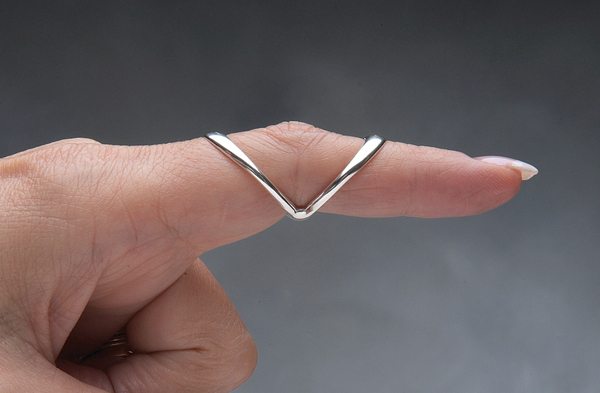
- Custom splinting: Specialized ring or V-shaped splints can help prevent the middle joint from bending backward, allowing tendons to recover
- Hand therapy: Structured exercises, stretching, and massage improve flexibility and strengthen supporting muscles
- Addressing underlying conditions: Managing arthritis or inflammation helps protect joint stability
While these approaches are often highly effective, sometimes surgical care is warranted. Surgical options may include:
- Soft tissue repair: Realigning and repairing tendons and ligaments
- Joint replacement (arthroplasty): Replacing a damaged joint with an implant
- Joint fusion (arthrodesis): Stabilizing the joint in a fixed position to reduce pain
Surgery can improve hyperextension in the PIP joint by about 11 degrees on average. However, surgical outcomes can vary, with some studies showing an approximate 33% reoperation rate in complex cases.
Make an Appointment With Dr. Knight Today
For expert swan neck deformity treatment in Dallas, TX, Dr. Knight offers advanced care at both the Southlake and Dallas-Fort Worth locations. Make an appointment or contact our office today to learn more about your treatment options.
Swan Neck Deformity Fact Sheet
| What causes Swan Neck Deformity? | Several conditions can cause the symptoms that lead to a Swan Neck Deformity, such as trauma, a stroke, parkinson's disease and cerabral palsy. These conditions weaken the volar plate to which the flexor tendons are connected, as well as the small muscles of the hand, and set the stage for the deformity. |
| Can my Aswan Neck Deformity be treated without surgery? | While a doctor will need to diagnose the condition, if it is detected early enough then there are splints specially designed to hold the finger in a postion that will help the tendons heal correctly and reduce the deformity. |
| What medicines can I take to treat or stop a Swan Neck Deformity? | The underlying conditions listed above that can lead to a swans neck deformity can be treated with various medications, but the actual physical affects of the condition do nto respond to this type of treatment. |
| Will Swan Neck Deofrmity go away on its own? | If left untreated, the swan's neck deformity can indeed be permanent. While not as traumatically reductive of range of motion and use than some other conditions of the hands tendons, it will still make adjustent necessary, so it is best to seek medical treatment as soon as you suspect that you may be developing the condition. |
| How is Swan Neck Deformity treated by the doctor? | If the splinting and therapy first attempted to reverse the condition are not successful, then surgery may be necessary in order to stop the progression of the condition. The most common surgical remedy is a soft tissue repair, putting the internal mechanisms of the finger back in their appropriate places, but in the most sever cases, the joint may need to be entirely repalced with a synthetic implant. This is, as always, a last resort. |
| Can I get a Swan Neck Deformity in my thumb? | Yes, this condition can affect all fingers on the hand. |
Frequently Asked Questions:
What causes a Swan Neck Deformity?
The most common cause of a swan neck deformity is rheumatoid arthritis. It can also be caused by any condition that weakens the small muscles of the hand and fingers, such as a stroke, trauma, or even cerebral palsy. It is also possible to develop a Swan Neck deformity as the result of an untreated mallet finger, as the same muscles and tendons are involved in both conditions.
How can I treat a Swan Neck Deformity at home?
Conservative treatment of a swan neck deformity is unique and involves the use of a very specific type of splint that was designed to precisely remedy the tendon damage that creates the deformity. The splint looks like two rings joined in a V shape at the bottom, which cradle the central knuckle of the affected finger. This makes it so that the proximal interphalangeal joint cannot hyperextend, which then allows the tendon to rest and heal, reversing the damage caused by the condition in the first place.
Do I need surgery for a Swan Neck Deformity?
In most cases, conservative treatment of the condition is effective and surgery is not required, but in the most extreme examples, one of two types of surgery may be required. The lesser option involves the repair and realignment of the tendons and soft tissues of the proximal interphalangeal joint which will reverse the symptoms and allow the finger to heal properly and give you back your comfort and range of motion.
Animated Videos
Disclaimer
HandAndWristInstitute.com does not offer medical advice. The information presented here is offered for informational purposes only. Read Disclaimer