When To Choose Urgent Care vs. ER for Hand Injuries
Call (817) 382-6789 to have this looked at, or book online with Dr. Knight.
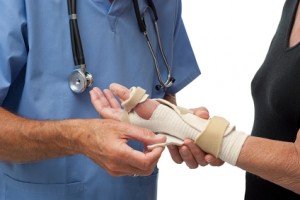
The smallest slip is all it takes for a hand injury to throw a wrench in your day. From minor cuts to painful fractures, injuries of the hand and wrist are incredibly common, accounting for as many as 2.6 million emergency room (ER) visits each year in the United States (U.S.) alone. The first challenge is knowing how severe the injury really is and where to go for care.
How To Decide: Urgent Care or ER for a Hand Injury
Choosing between the ER and urgent care starts with assessing the severity of the injury and how your hand is functioning in the moment. Start by assessing stability. For example, if your hand looks significantly injured or deformed, isn’t working properly, or symptoms are rapidly worsening, emergency care is probably the safest bet. Injuries that involve heavy bleeding, loss of feeling, or changes in skin color may indicate damage to blood vessels or nerves, which requires immediate attention.
Alternatively, if the injury is painful but stable, meaning that bleeding is controlled, movement is mostly intact, and there are no signs of circulation problems, urgent care may be most appropriate for your evaluation.
A general rule of thumb is that any potentially life- or limb-threatening conditions belong in the ER, while stable joint, bone, or soft tissue injuries are better suited for urgent care settings.
Go to the ER Immediately if You Notice These Signs
Deep cuts, crush injuries, or high-impact trauma, such as those involving machinery, power tools, or broken glass, can damage structures beneath the skin that aren’t always visible at first. Emergency departments are equipped with advanced imaging, surgical tools, and specialists who can quickly assess and repair these injuries.
Seek emergency care right away if you notice any of the following:
- Severe or uncontrolled bleeding, especially if it soaks through bandages or spurts
- Visible bone, muscle, or fat, which can indicate a deep or complex wound
- Loss of sensation (numbness or tingling), which can indicate nerve damage
- Inability to move fingers normally
- Pale, blue, or cold fingers, which can indicate impaired blood flow
- Deep, jagged, or contaminated wounds
Additionally, animal or human bites should always be evaluated immediately, as they carry a risk of serious infection. If you’re unable to drive yourself to the hospital and don’t have a ride, call 911. Delaying care by even a few hours can increase the risk of infection, stiffness, or permanent loss of hand function.
When Urgent Care Is the Right Choice for Hand Injuries
For hand and wrist injuries that are uncomfortable but not severe, urgent care may be the most practical and efficient option. Urgent care and walk-in clinics are designed to handle non-life-threatening injuries that still need prompt attention, especially when your primary doctor isn’t available.
In general, urgent care is usually most appropriate when symptoms are stable and predictable. That means that they’re not rapidly worsening or affecting circulation or nerve function. In these cases, timely evaluation can still prevent complications without the need for emergency-level resources. You might consider urgent care if you have:
- Mild to moderate pain or swelling after a fall or injury
- Suspected minor fractures without visible deformity
- Sprains or strains affecting the fingers or wrist
- Small to moderate cuts that may require medical attention but not necessarily stitches
- Stiffness or limited motion without complete loss of function
These types of injuries are among the most common, with sprains, strains, and uncomplicated fractures making up a large portion of hand injury cases seen each year. Early evaluation helps confirm the diagnosis and guide next steps while reducing the risk of lingering pain, stiffness, or improper healing.
What Urgent Care Can Actually Do for Hand Injuries
Urgent care centers are equipped to do more than just make a professional assessment. They can also provide immediate, targeted treatment to support healing and prevent complications. While they’re not a replacement for emergency departments in cases of severe trauma, they often play an important role in early orthopedic care. In many cases, urgent care can:
- Perform on-site X-rays to identify joint injuries or fractures
- Clean and close wounds, including stitches for minor to moderate cuts
- Apply splints, braces, or protective wraps to stabilize the hand
- Provide tetanus shots and basic infection prevention for open hand wounds
- Evaluate range of motion, strength, and sensation to rule out deeper injury
While these capabilities are more limited than those in the emergency room, they still allow providers to quickly determine whether an injury can be managed conservatively or needs referral to a specialist. Urgent care centers are also designed to deliver faster, lower-cost care for non-emergencies while still offering essential diagnostic tools like imaging and basic lab work.
Quick Decision Guide: Hand Injury Scenarios at a Glance
When time is of the essence, a quick mental checklist can help you decide where to go without second-guessing. Urgent care is generally the best option if:
- The injury involves bones, joints, or soft tissues, such as a sprain or minor fracture
- Your symptoms are stable overall, with no worsening symptoms
- Bleeding is controlled, and the wound isn’t deep, jagged, or complex
- You can still move your fingers and have normal sensation
- There are no color changes, such as pale or blue skin, or physical deformities
Go to the ER or call 911 right away if:
- A bone is visible, or the hand looks severely deformed
- There is heavy bleeding or a deep wound
- You notice numbness, discoloration, or loss of movement
- The injury occurred with significant trauma or affects other parts of the body
If you’re still on the fence about which route to go, choose the safest option and go to the ER.
Questions? Call Us Today
Even after an ER or urgent care visit, follow-up with a hand specialist is essential, as subtle injuries to tendons, nerves, or joints can be missed early and may affect long-term function. Dr. Knight and his team at the Hand and Wrist Institute provide precise evaluation and advanced care to support full recovery. Call our office or make an appointment today.