Endoscopic Carpal Tunnel Release
The transcript below is YouTube's automatic one. Anatomy terms are the words the machine heard, so a few of them are wrong. The practice is proofreading them.
- Video ID:
1_CnfLDUJiQ - URL: https://www.youtube.com/watch?v=1_CnfLDUJiQ
- Uploaded: 2012-10-08
- Duration: 617s
- Views at capture: 62462
- Captions: YouTube auto-generated (no manual track published)
Description (channel copy)
http://www.handandwristinstitute.com/carpal-tunnel-release-surgery-los-angeles/ - Video of stitchless endoscopic carpal tunnel release. Dr. Knight provides information on carpal tunnel syndrome and the ECTR surgery to repair.
Transcript
over 2 and A2 million people a year are inflicted with the diagnosis of carpel tunnel syndrome to understand this diagnosis in better detail it's important to understand a little of the anatomy in the wrist the carpal tunnel is a tunnel deep in the wrist here
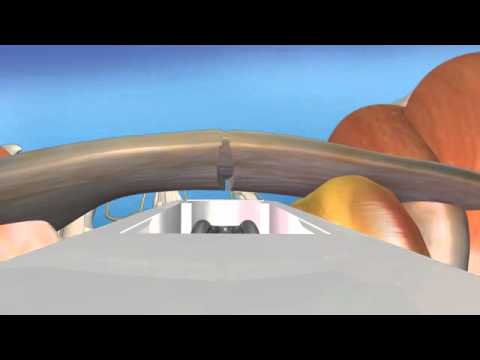
that's made up of a the T the floor of the tunnel is made up of the back of the bones of the wrist across that tunnel is a ligament called the transverse carpal ligament which we'll talk about when we talk about the surgery for this condition but with technology today
there's increased use of the fingers flexing through that tunnel that leads to a development of inflammation on the tendons within that tight unyielding space the inflammation puts pressure on the median nerve which is a nerve that goes through the tunnel out to the
fingers of the hand within from repetitive use with daily AC activities with uh increased computer use with blackberries Etc our technology has made this a more common occurrence to discuss a little of the diagnosis of carpal tunnel syndrome the
subjective complaints for when a patient comes into my office one of the first things they talk about is that they have numbness and tingling more commonly Awakening them at night commonly it occurs because the nerve goes to these four digits it's mainly the four these
four digits excluding the little finger they also with more pronounced symptoms may get actually loss of feeling in their hand and actual motor loss of the of the muscles that allow the thumb to oppose to the digits resulting in clumsiness with buttoning clothes using
a pen for writing Etc under examination the patient we tap over the nerve at the tunnel the median nerve and if that causes tingling within the fingers that suggestive of the diagnosis we also ask the patients to flex their wrists leading to incre
increase pressure within the carpal tunnel which is a called a phin test so that reproduces what happens at night when you're sleeping you tend to sleep in a fetal position the wrist drawn up leading which causes increased pressure within the carpal tunnel also we look at
the we do a full sensory and a full sensory and motor exam to see if there's loss of feeling and any loss of strength within the thumb muscles so once we have a proper diagnosis of carpal tunnel syndrome now it's important to talk about treatment treatment in most cases
with conservative treatment the symptoms will go away in severe cases though surgery may be necessary for the conservative treatment wearing a wrist brace at night when you're sleeping to prevent flexion flexion of the wrist is important that's the number one
treatment also resting the wrist and the fingers ergonomically looking at the workstation at work if they're a typist or if or adjusting the string tension if they're a guitar player Etc uh anti- inflammatory medication in some cases a cortisone shot into the
carpal tunnel may also reduce swelling in more severe cases though surgery may be necessary now with the Advent of endoscopic carpal tunnel release surgery is highly effective but with minimal scarring and a very quick return to work we do a 10-minute outpatient surgical
procedure that involves a 1 and 1 12 CM incision across the crease of the wrist and the pain and the recovery the pain has lessened significantly compared to the oldfashioned open proc procedure which involved a very lengthy scar across the Palm now I have patients
returning to full work uh within a month after surgery so it's highly effective and much less pain than the than the standard open procedure now we'll start with a skin
incision
I'm going complete the cut
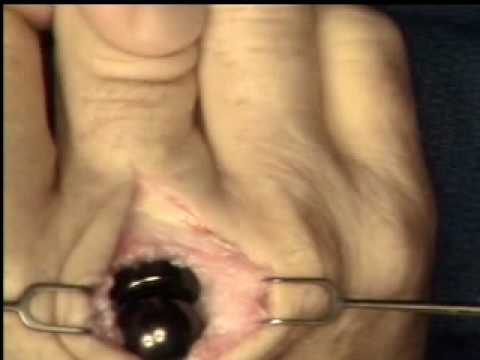
proximal and now I have a U-shaped distal based flap that we're going to now place a small skin hook on that will essentially be my guide into the carpel tunnel fors please
here now I'm going to open approximately 2 cm of the anab brachial fascia at the vlar midline of the distal Farm proximal that'll help facilitate the scope scope placement into the carpal tunnel now I'll will take the
spatula and I'm going to run this into the carpal tunnel and I'm going to scrape the unders surface of the transverse carpal ligament just to make sure there's no Os synovium or lining of the tendons that's adherent to the unders surface of where
I'm going to be dividing the transverse carpal ligament
so now we're going in into the carpal tunnel you see the transverse carpal ligament
fibers right
there you can see I'm pushing beyond the transverse carpal ligament beyond the carpal tunnel
now I'm going to engage the blade you see right there and I'm going to cut the not go all the way to the very end I'm going to cut the distal fibers here partially you see the partial cut
there now the two edges you can see are still intact there so you got to if you see those within the viewing surface of the or within the video monitor and you haven't and it's a v-shaped configuration there you haven't completely transsected it
little fat on the there we
go we're going to complete the transsection proximal we're going to go all the way but not to the very edge proximal will come back and do that with our scissors
distal now we we're going to run the radial column of the transverse carpal ligament all the way proximal showing complete division except what we're going to complete proximal with our scissors on the way out and then there's the owner
column again you don't see the two edges within the view of the scope at any point all right so that's open all the way down and we're going to inspect the median nerve now you can through this field look at the nerve and make sure
there's no masses within the carpal
tunnel that's the nerve there and it's intact after the procedure which is important obviously okay come on out now we're going to let just apply some uh pressure to the incision and we're going to let the tourniquet down
now tourni it down
please it's usually with direct pressure for about 5 minutes is all that's needed to stop any oozing before closing the
wound you can see the fingers pinking up now all of them and the Palm I'll just liberally apply some dermabon skin
glue dressing
please just going to put a little little sponge with a teadm dressing over it so they can start showering right away
and now they can apply ice post-operatively along with elevation to minimize swelling and can start arranging motion of the hand and wrist within the first 24 hours this procedure as you can see involved a very small incision through a minimally invasive
approach as you can see from her left wrist done 3 months ago with this latest technology we are now able to bring life back to her
hands