Swan Neck vs. Boutonniere
Call (817) 382-6789 to have this looked at, or book online with Dr. Knight.
Swan neck deformity and Boutonniere deformity are both conditions that affect the joints in the fingers. These deformities cause the finger to lose mobility and flexibility and take on an unnatural shape. These conditions can be caused by injuries to the hand as well as rheumatoid arthritis. If you’re having trouble moving, bending, or straightening your fingers, you should speak to a doctor as soon as possible. Both swan neck deformity and Boutonniere deformity worsen over time.
What is Swan Neck Deformity?
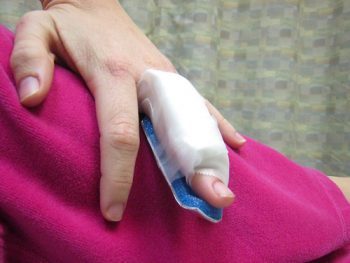
Image via Flickr by seantoyer
Swan neck deformity is a condition that causes the finger to take on a distinctive shape resembling a swan’s neck. The condition is characterized by proximal interphalangeal (PIP) joint hyperextension and distal interphalangeal (DIP) joint flexion, meaning that the joint at the base of the finger bends inward, flexing the finger upwards. Meanwhile, the middle joint extends into a straightened position, and the outermost joint turns inward again. Swan neck deformity can affect any finger, but it cannot impact the thumb, as there is one less joint.
What Causes Swan Neck Deformity?
Swan neck deformity often occurs as the result of unusual stress on the volar plate or PIP joint. However, this condition can result from any traumatic injury to the finger joints.
Cerebral palsy and rheumatoid arthritis are other leading causes of swan neck deformity. As many as 50% of patients with rheumatoid arthritis also have swan neck deformity. Patients with these conditions may want to talk to a doctor about methods for preventing this deformity.
Less common causes of swan neck deformity may include:
- Nerve damage.
- A loose fibrous plate in the hand.
- Ruptured finger tendons.
- Loose finger ligaments.
How is Swan Neck Deformity Diagnosed?
Swan neck deformity usually begins with joint pain and a slight difficulty bending one or more finger joints. As the condition progresses, it becomes pretty visible in the way the joints flex and hyperextend.
Doctors diagnose swan neck deformity with a visual examination of the hand. The doctor will look specifically for a hyperextended PIP joint and flexing the fingertip toward the palm. The doctor will also check the active range of motion that the patient can manage on their own and the passive range of motion that’s possible when outside pressure is applied to the joint. A doctor may order x-rays to assess the extent of the damage.
Swan neck deformity results in limited mobility of the hand. Your doctor can diagnose this as a disability when fundamental function is lost.
What is the Treatment for Swan Neck Deformity?
In the early stages, swan neck deformity may be treated with finger splints and physical therapy to restore motion and flexibility to the joints. In many cases, focusing on the PIP joint will also repair the DIP joint. However, swan neck deformity is a progressive condition. Therefore, in later stages, surgical treatment may be necessary.
Several surgeries may help with swan neck deformity. A soft tissue surgery can release and align the ligaments, although physical therapy is needed post-surgery to restore the full range of movement. A finger joint fusion may be used to stabilize the joint and prevent further deformity. Unfortunately, a joint fusion limits mobility. A PIP joint arthroplasty is the replacement of some or all of the PIP joints in the fingers. Soft tissue around the joints is reconstructed to restore some of the movement to the affected finger.
What is Boutonniere Deformity?
Boutonniere deformity is a condition that causes extension at the knuckle and DIP joint with flexion at the PIP joint. Visually, this is the exact opposite of swan neck deformity, as Boutonniere deformity makes the finger extend upward at the knuckle, down from the central joint, and up at the fingertip. There are four stages of Boutonniere deformity:
- Type 1: The finger remains flexible with a full range of motion.
- Type 2: The finger is flexible but has a limited range of motion from the knuckle.
- Type 3: The finger is stiff, but the PIP joint articular surfaces are not affected.
- Type 4: The finger is stiff, and there is destruction of the PIP joint articular surfaces.
What Causes Boutonniere Deformity?
Boutonniere deformity is typically caused by an injury to the hand that exerts a significant force on the top of the finger’s middle joint and damages the tendon that runs along the back of the finger or thumb. In some cases, this injury makes a cut on the top of the finger that looks like a buttonhole. Boutonniere is French for buttonhole, giving this injury its name.
Rheumatoid arthritis is another common cause of Boutonniere deformity. Arthritis can cause a weakening of the tendon along the back of the finger, which results in this condition.
How is Boutonniere Deformity Diagnosed?
Your doctor will perform a physical examination to diagnose Boutonniere deformity. This condition is characterized by the inability to straighten the middle joint or bend the fingertip. Swelling and pain often accompany the injury. Your doctor may order an x-ray to determine whether any of the bones in the finger are broken.
What is the Treatment for Boutonniere Deformity?
It’s best to treat Boutonniere deformity as soon as possible to prevent permanent damage to the finger. A nonsurgical splint is the preferred treatment option. This straightens the finger and immobilizes the joint so the tendon can heal properly. Patients usually need to wear this splint for a period of three to six weeks. For those with arthritis, corticosteroid injections and oral medications may help as well.
If splinting does not work or there are other complications, your doctor may pursue surgery for Boutonniere deformity. This may be necessary if the tendon is completely severed or part of the bone is displaced. Surgery is more common for Boutonniere deformity resulting from arthritis.
Contact the Hand and Wrist Institute Today!
It’s much easier to treat swan neck deformity and Boutonniere deformity in the early stages. The sooner you can speak to a doctor about these conditions, the better your chances are of regaining a full range of motion in the hand. If you’re suffering from any kind of finger or hand problems, contact our team at The Hand and Wrist Institute for a diagnosis and treatment plan.