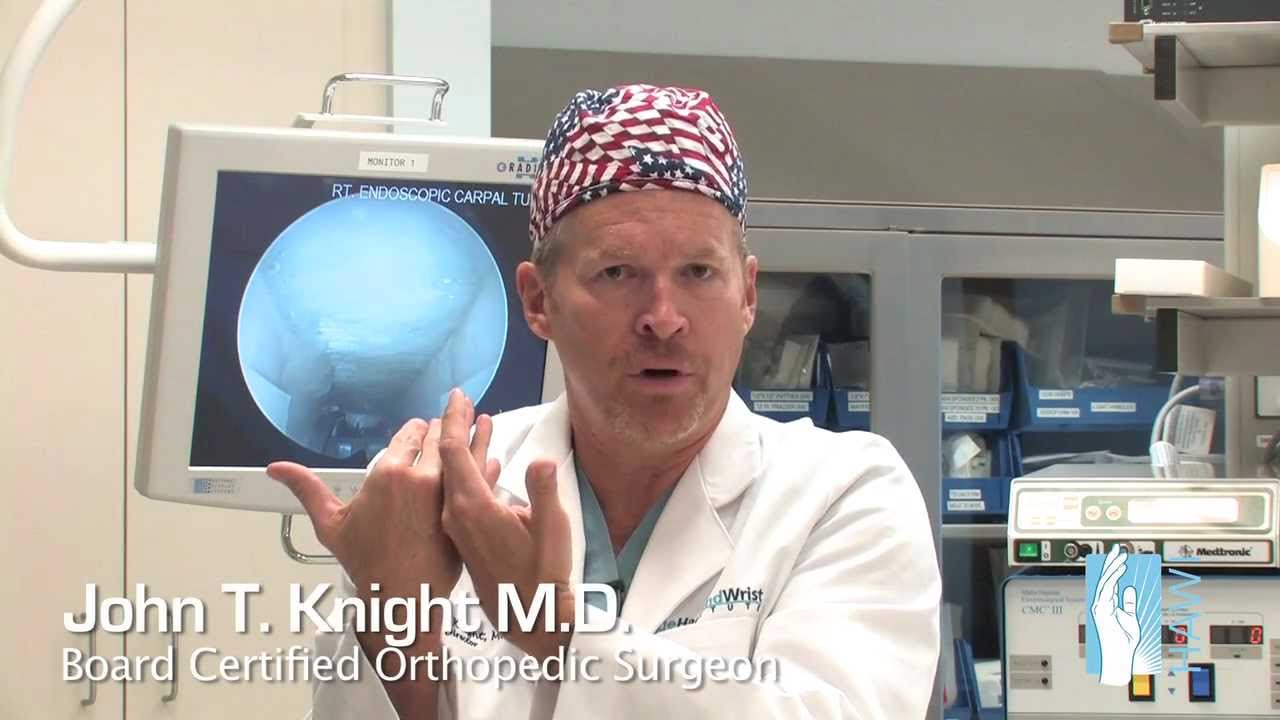
Dr. Knight discusses Mommy Thumb on the Doctors TV show.
The transcript below is YouTube's automatic one. Anatomy terms are the words the machine heard, so a few of them are wrong. The practice is proofreading them.
- Video ID:
sSH9LGakiZs - URL: https://www.youtube.com/watch?v=sSH9LGakiZs
- Uploaded: 2015-07-07
- Duration: 201s
- Views at capture: 3542
- Captions: YouTube auto-generated (no manual track published)
Description (channel copy)
Dr. Knight talks with his patient about her treatment for Mommy Thumb on the Doctors TV show.
Transcript
Could this happen to you? The pain is so chronic that it hurts to lift and even feed the baby. Look at mom Karen and baby
Jake. Hello, doctors. My name is Karen, and this is my son Jake. Jake is 3 months old and already weighs 17 pounds. About a
month after his birth, I started to feel severe pain in my wrist. He has become so strong that I have difficulty
breastfeeding him and sometimes even holding him. Sometimes the pain is so intense that I'm afraid to let it go. I tried cortisone injections and wearing a
bandage at night, but they didn't bring much improvement. What can I do to get rid of the pain? Karen joins
us with her husband Darren and baby Jake, and here to answer her questions is orthopedic hand surgeon Dr. John T. Knight.
Welcome to all of you. So, Dr. Knight, what's going on here? She has an illness. For years it has been called
de Quervain's tendinitis. It now occurs in half of all mothers, and it is a quite disabling condition. It involves the thumb extensors
, which pull the thumb away from the hand. And this is a narrow tunnel where these tendons go, and as a result of frequently
lifting the baby 30 to 40 times a day, holding the baby's head in your hands while breastfeeding, in addition to other conditions like
frequent texting in working mothers, having children later in life, which is less resistant to inflammation, and,
you know, a lot of other things, but these are the main culprits, and this lifting with this L- shaped position of the baby under the arm. So I think it's
important to start with the first treatment. Her hands are like this, and the only way to get around it is to hold the baby
with her hands. It's uncomfortable, but it's really the only relief in terms of how you, you know, can change the lift. Are you ready to try this? How would
mom do it? You want to keep your thumbs in, and you want to put one hand under the baby's buttocks, and then
keep your thumbs in like this over and over again. So, you can't, you know, completely, you know, change the way you raise a child.
Is this Karen? Because I see your inclination, I watched you while recording. Yes, you tend to stick your thumb out.
Even so, yes. So, even...That's it. And this is different from carpal tunnel syndrome, which occurs in many women in the
last trimester of pregnancy. That's right. But it doesn't become symptomatic until the baby, you know, gets a little heavier and
then she starts lifting it, and that can take anywhere from 6 months to 2 years because you still have to lift the baby. So the first thing to
do is rest, ice, of course, activity modification, anti-inflammatory medications, and then if that doesn't help,
then, as in Karen's case, we try a cortisone shot. You can do a few of these if they get easier, and in 10% of cases they do. And he
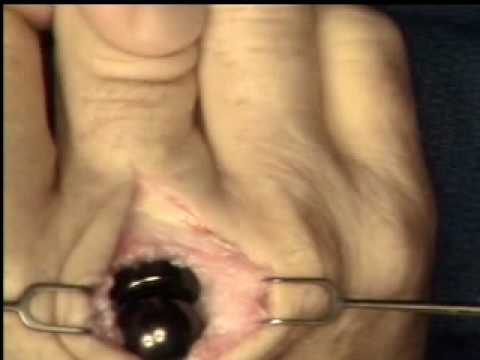
agrees, and in about 10% of cases, surgery may be necessary , and that's the direction we can move with it, which has a
95% success rate - small 10- minute outpatient procedures with a 1 cm incision. So the main thing is prevention, as much as possible.
Well, you have one beautiful little one here, Jake. Thank you very much. Thank you both for being here tonight . Thank you for helping to explain
this situation.