Cubital Tunnel Surgery
The transcript below is YouTube's automatic one. Anatomy terms are the words the machine heard, so a few of them are wrong. The practice is proofreading them.
- Video ID:
wmYyI0tpTWQ - URL: https://www.youtube.com/watch?v=wmYyI0tpTWQ
- Uploaded: 2014-11-15
- Duration: 602s
- Views at capture: 403176
- Captions: YouTube auto-generated (no manual track published)
Description (channel copy)
http://www.handandwristinstitute.com/cubital-tunnel-syndrome-treatment/ - Cubital Tunnel Syndrome is a space at the inside of the elbow, Cubital Tunnel, where the ulnar nerve passes alongside the humerus, or funny bone. In fact, the ulnar nerve is actually responsible for the sensation commonly referred to as the funny bone, and not the bone at all. The ulnar nerve is a centrally important nerve to the arm, and provides both use and sensation, so when it is compressed within the Cubital Tunnel, its effectiveness and use can be hampered by this interruption.
Splinting and medication are the only really effective non-surgical treatments for Cubital Tunnel Syndrome, and even then are only effective in patients with mild and intermittent symptoms. NSAIDs to control inflammation will lessen the degree to which the nerve is entrapped in the tunnel. The use of a Pil-O brace when sleeping holding the elbow extended or straight may reduce symptoms or an elbow pad during the day when resting the elbow on hard objects may alleviate direct pressure
When and if non-surgical attempts to treat Cubital Tunnel Syndrome prove ineffective, surgery is most likely the only option. In this case, there are several possible surgeries that your doctor may suggest, depending on the specifics of your case.
There are several standard procedures that may be done to alleviate the compression. Ulnar nerve decompression with medial epicondylectomy releases the tunnel and then removes part of the funny bone or medial epicondyle. Anterior transposition procedures may also be employed, either with subcutaneous (over the muscle) or submuscular (beneath the muscle) placement of the nerve. When the nerve is transposed care must be taken to move the blood supply with the nerve to keep adequate circulation to the nerve. A submuscular transposition is frequently recommended for elite overhead athletes to put the nerve in a more protective position. Some surgeons perform an endoscopic ulnar nerve decompression procedure, which releases the nerve only. The concern with this procedure is it may not release other sources of compression and the incision is not much smaller than the more traditional procedures.
After surgery, you will be placed in a splint for a length of time determined by your surgery (10 days for the epicondylectomy and up to 3 weeks for the transposition procedures), after which time hand therapy will be necessary to restore full function.
Transcript
Let's talk about cubital tunnel surgery. Cubital tunnel syndrome is compression of the er nerve at the elbow. It's the second most common area of nerve compression secondary to only carpal tunnel syndrome. There are many daily activities that can precipitate cubital
tunnel syndrome. Let's look at one right here. This is a lady talking on the phone, bending her elbow. This repetitive elbow flexion or bending for prolonged periods of time can cause increased tension on the nerve. Also, as this this gentleman right here is doing,
he's resting his elbow on a hard tabletop. Not a good thing. We all have poor posture and tend to lead uh lean to one side or the other just as he is doing. And this can also cause problems. Also sitting at the keyboard all day long typing and moving the hand and
fingers uh the and wrist repetitively can lead to increased tension or inflammation around the er nerve at the elbow causing symptoms. Let's take a look at the anatomy though to get a better appreciation of what's happening here. The owner nerve is this yellow
structure coming uh down the inside of the arm right along here. Goes right behind the meo epicondile at the end of the humorous bone or what we lay people refer to as the funny bone. It's in this area behind the funny bone or epicondile. As the nerve comes down, it
can get trapped. It goes between two muscles here and can get entrapped. And then what this nerve does the function is it gives uh sensation to the little and ring fingers. But more importantly, it gives us all the m motor fine dexterity or fine muscle movement within
the within the hand. Most the muscles are supplied by the er nerve that gives us the ability to pick up small objects, coins, button clothes, uh anything force uh any uh pinching of keys and things like that. This nerve gives us the motor the muscle function uh or impulse for
that muscle function. So let's take a look at now the area of compression. The nerve comes down behind along the inside of the of the arm. Goes behind the funny bone. This is the epicondile here. The muscles that flex the fingers or bend the wrist all come from this area. So
it's bene behind this bone where the nerve can get with flexion of the elbow gets pulled up behind that area leading to compression. Also, the nerve then comes between two muscle bellies right here where this band of tissue that it's in this area where that tunnel can
become compressed and cause symptoms. So, let's take a look at the actual symptoms that are happening. Classically, numbness and tingling with cubital tunnel syndrome affects a little finger and the half of the ring finger. Now pain also can occur from along the
inside of the elbow at the point of compression and where this rectangular box is an area where pe where patients can feel uh symptoms of pain up and down the forearm. In severe cases this circle areas are those fine little muscles that give us dexterity and the in these areas
in severe cases you can get weakness or loss of pinch or grasp or these fine motor movements with almost with paralysis in in really severe cases. So let's take a look now at the uh at what what we need to do as a hand specialist to diagnose the problem. First and
foremost, this is a clinical a detailed clinical examination is what leads to the diagnosis. That's the most important thing. But then we'll get electrodiagnostic testing or what's referred to as an nerve conduction velocity test. And what the neurologist
does that we send these patients to is they will put an electrode uh in the hand and the stimulator here and they'll stimulate the nerves down the forearm across the elbow and across the wrist. If there's any delay such as in cubital tunnel syndrome uh between above the
elbow to just below the elbow that's indicative that there is a lack of impulse or a lack of circulation to the nerve causing uh cubital tunnel syndrome. It's important to know though in 20% of patients a normal electrodiagnostic testing may be present
in a patient that has clinical uh findings of of cubital tunnel syndrome. In on the other side of the coin in 20% of patients that the nerve test shows cubital tunnel syndrome the patient may not have any symptoms. So it's very important to first and foremost as a
hand specialist to examine the patient. That's how we make the diagnosis and then we can look at the nerve test as an adjunct to determining uh just how severe the problem is. Okay, let's take a look now at at the treatment for this conservative treatment at the top here
resting the arm in overuse syndromes or overuse conditions putting the arm the elbow in this case at rest as well as the wrist and hand insaids anti-inflammatory medication to reduce inflammation within that tight space. ergonomic modifications. We look at
again, as we said, resting the elbow on hard objects. So, we want to get that elbow off of the arm the the um the armrest of the chair, have it just supporting the forearm, uh comfortable position at the keyboard, and then modifying the amount of typing, amount
of activity, amount of repetitive movement of the elbow, wrist, and fingers. We want to reduce that by ergonomic modifications. And finally, the most important uh bracing technique that can help this is called a pillow pillow brace. In the old days, people
used to take a brace or a pillow, wrap it around the arm to keep the elbow from bending at night. The night night time is a time when we rest. We want to rest the elbow. We tend uh to sleep in a fetal position, bending the elbow, which puts undue stress across the nerve. So,
we want to get a pillow brace. It's spelled P I L- O Brace. Just Google it. You'll see many places you can order this. And what this does is it holds the elbow in a an extended resting position at night. So if conservative treatment fails, then we have to look at surgical
intervention. There's some uh three techniques that are highly successful for surgical intervention. But let's take a look at what's again the anatomy, the er nerve coming down behind the epicondile or funny bone. And the first treatment with surgery is to go in as
you'll see from this next image looking at it from the side view. We want to go in here and we want to open up the cubital tunnel, open up those sources of compression. Then once we open it up, we're going to do one of three procedures. Typically, these are the
standard procedures. The first two we're going to talk about are called transposition procedures. As you'll see in this, in this case, the nerve is decompressed and then the nerve is going to be moved over the epicondile on the top side of this. There are two
procedures. One is moving the nerve below the muscle, which is called a submuscular transposition. and the other is putting it uh above the muscle and that's called a subcutaneous transposition. Both of these move the nerve from its original bed and put it
on take it with the blood vessels and put it on top either top of the muscle or below the muscle. Now the below the muscle or submuscular transposition has been advocated for elite overhead athletes such as pitchers in baseball or professional quarterbacks because the
velocity they throw the ball or football with is so significant that it puts a lot of stress across that area. So you want to put the nerve in that case below the muscle to really try to protect it. So again, we're gonna move the nerve forward and as you'll see here we you'll
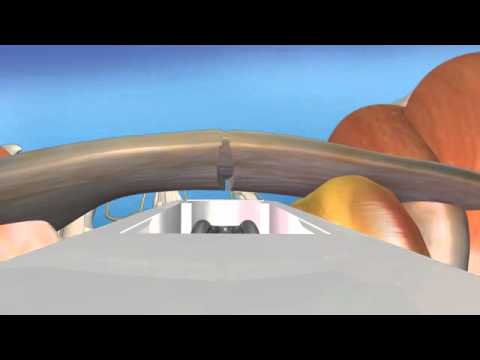
the nerve is now in a different core. So the nerve comes down. it was back here. Now it's been flipped up and it's going either above the muscle or beneath the muscle diagonally across the elbow. So the this next slide will actually show a nice animated image here. The nerve is
being decompressed. This yellow structure muscles being elevated. The nerve is put down through that. So those are the two transposition procedures. But there's one third procedure that's very popular and that's decompressing the nerve as we said right behind the
funny bone. And then we're actually going to remove half of that funny bone or the epicondile. It's called a medial epicondlectomy. And what's happening is we go in and remove that compression on the nerve. And then if we just did that, the nerve could flip back and forth when
the elbow bends or or straightens. And so we don't want that to happen. That can cause problems with the nerve. So we take off a little bit of the bone just to narrow just to uh remove part of the heel that nerve uh has to climb over. And but we we're it's very important to
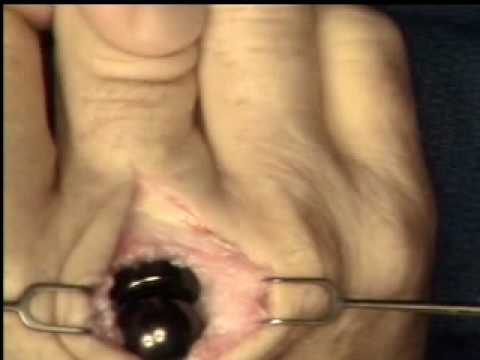
uh not take off too much bone or you can disturb the allimportant er collateral ligament. So after this uh we're going to take a look at now in an actual patient this is towards the hand up up that way is towards the head. So here comes the er nerve as you can see
denoted by this arrow here little blood vessels with it. Nice picture of this and this is the epicondile right here with a star. So the nerve is coming behind the epicondile and we've opened up the tissue here to expose that. Then you can see that the this thick band
between the two muscles of the FCU muscle and it's between these two thick bands and that nerve can become compressed such as this case. So we're going to uh show this we're going to ultimately open up this uh tunnel completely and then we have we can do
one of those three procedures. either take this nerve, cut a trough through the muscle, put it beneath the muscle, simply just put it on top of the muscle and anchor it with some of the fat right here. Or we can elevate the muscle from this bony prominence or the epicondile,
shave off a little bit of the epicondile and then just repair the muscle and then the nerve actually just stays in its normal position. So after the surgery, we'll place you in a in a long arm splint from the fingertips all the way up above the elbow, but we leave the
room for the fingers uh to move. After the uh with the splint on for the epicondile epicondlectomy procedure, you're usually in a brace for about 10 days. Then the splint comes off and you start therapy. In the transposition procedures, usually you're immobilized
for three weeks. Overall, the total recovery time following this procedure is about two to three months. The overall success rate is about 90%. For more on this condition and many other conditions, please check out our website.