Radial Tunnel Surgery
The transcript below is YouTube's automatic one. Anatomy terms are the words the machine heard, so a few of them are wrong. The practice is proofreading them.
- Video ID:
KQWuLIAm-mg - URL: https://www.youtube.com/watch?v=KQWuLIAm-mg
- Uploaded: 2014-11-08
- Duration: 237s
- Views at capture: 95190
- Captions: YouTube auto-generated (no manual track published)
Description (channel copy)
http://www.handandwristinstitute.com/radial-tunnel-syndrome/ - When the radial nerve becomes entrapped as it passes through the upper part of the forearm, this is known as Radial Tunnel Syndrome. It is most often caused by everyday activities, especially those one finds working in an office (i.e. keyboard use, mouse, etc.) as well as strenuous physical exercise and lifting weights.
On its way across the upper radial side of the arm, the radial nerve engages several muscles in the elbow, where it can become compressed by various structures , most often the supinator muscle. From this compression, pain radiates downward towards the wrist, affecting the entire forearm. Occasionally, wrist pain without specific cause such as trauma may be present, and this can indicate entrapment. It is also common to see this in conjunction with tennis elbow, and it is important to determine that it is not solely that to ensure proper treatment. Unlike carpal tunnel and ulnar nerve entrapment, tingling and numbness are not generally symptoms of radial nerve entrapment.
As with many upper extremity conditions, rest, anti-inflammatories and bracing, as well as workplace modification, can be effective in treating the symptoms of RTS.
Surgery may be necessary if conservative treatment fails to relieve symptoms. A relatively short outpatient procedure is required, in which the supinator muscle is released, but because of the involvement of the biceps muscle, loss of function is not an issue here. A larger incision is preferred because it allows for sufficient compression at all areas that are affected by RTS.
Three weeks of immobilization will follow the surgery, as well as several more weeks of therapy, which altogether means a recovery period of about three months. The success rate for this type of surgery is about 90%, with a general return to full function.
Transcript
let's take a look at radial tunnel surgery radial tunnel syndrome is a very common condition affecting the radial nerve in the upper form where this becomes pinch or ENT trapped leading to a very painful condition there's several day-to-day activities that can
precipitate this more commonly computer keyboard and mouse use also forceful chopping of food gripping grasping such as this Chef here you can see throughout each workday this can become quite irritable to the nerve and finally we all like to go to the gym frequent
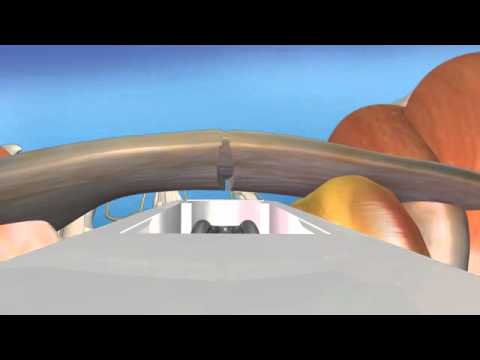
lifting or over lifting of Weights can lead to swelling of the muscles around the nerve but let's look at the anatomy closer now the radial nerve is a nerve that comes down the arm outside of the elbow through the radial tunnel in the upper forearm and it's in this area that
pressure can be applied to the nerve through swollen muscles and this nerve gives function of the muscles that extend the wrist and extend the fingers now the most common side of compression is the nerve again comes down here through the radio tunnel and it goes
beneath this superator muscle and it's in this area where the nerve is uh can definitely become entrapped and cause a lot of pain and in severe cases actually even weakness so let's take a look at at the actual pain pattern or symptom pattern you get with this RTS is radial
tunnel syndrome the blue rectangular box is the area of the pain pattern from the upper radial or outside forearm can radiate radiate down towards the wrist joint now some patients just come in and they have wrist pain they they have no mechanical symptoms whatsoever like a
wrist injury and all in all it is a actually a pinch nerve in the upper form the upper circle is tennis elbow that's the area on the outside or bony prominence part of the elbow that can be in close proximity to this and so for patients that are being treat treated
for tennis elbow and that even fa to the surgical intervention you have to look at what else is going on and they actually may have radial tunnel syndrome so the treatment for this initially conservatively of course and we're going to look at this is an overuse problem so
we want to rest it how do we rest it well we can wear a brace on the wrist or elbow in severe cases ineds or anti-inflammatory medications such as ibuprofen ergonomic modifications because frequently this is work rated so how do you what does this mean it means
that you look at the latest technology and computer keyboard uh keyboards mice looking at different equipment depending on what is really causing this work modifications meaning doing less resting more at work frequent break stretching uh and sometimes some time away from
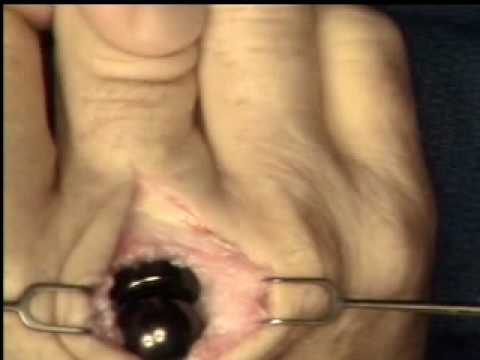
work to help that but if the conservative treatment fails sometimes surgery is indicated so let's take a look at the actual surgical incision uh some surgeons will make a smaller incision but you can't really decompress all the areas of compression other than
that superator muscle so frequently we'll make a larger incision it's a zigzag incision and we go in and we decompress all it all the areas but let's look down through that incision now to what we're really doing inside again all the points of compression that
may be a vein over the nerve could be some bands over fibrous bands over the nerve but more commonly we also release the superator muscle opening up the nerve now does this do you lose any function with this uh none whatsoever because the biceps tendon is a powerful
supinator which means rotating the for the forearm into a palm-up position so that takes over for any potential loss of function from cutting open this muscle so after the uh after the surgery uh we place the patient in a brace immobilizing the whole arm elbow and
wrist for about three weeks duration after the uh period of immobilization we start rehab and the overall Total Recovery back to full activities is about a three-month period there's a 90% success rate with this type of surgery for more on this
condition and many other conditions please check out our website