Ganglion Cyst Surgery
The transcript below is YouTube's automatic one. Anatomy terms are the words the machine heard, so a few of them are wrong. The practice is proofreading them.
- Video ID:
NBinFq0m5OM - URL: https://www.youtube.com/watch?v=NBinFq0m5OM
- Uploaded: 2014-10-11
- Duration: 202s
- Views at capture: 138679
- Captions: YouTube auto-generated (no manual track published)
Description (channel copy)
http://www.handandwristinstitute.com/ganglion-cyst-surgery/ - One of the most common wrist and hand problems that specialists encounter is the ganglion cyst. They are highly mutable condition, and cysts may be found at several different points of the hand, including, but not limited to, the top of the wrist, the knuckles, the outside of the wrist, and the metacarpophalangeal joints at the base of the fingers. Generally, activity increases the size of the ganglion as movement and use can increase the production of the fluid which creates it, while, conversely, rest can temporarily resolve the irritation of the cyst by reducing the amount of fluid, and subsequently, overall size.
Ganglion cysts most often become apparent when patients engage in pushing motions, such as those involved in pushups or certain yoga postures. Unlike some other cysts, traumatic injury is unlikely to have caused the development of ganglions. In the most common iteration, on the top of the wrist, the cyst extends upward from the joint like a balloon, and will manifest tenderness upon palpation.
Generally, an MRI is used to attempt to determine an appropriate diagnosis, but one must take into account that MRI is only effective about 50% of the time. MRI can be useful in finding other related problems, however, such as cartilage and ligament tears.
Some may aspirate a ganglion cyst, but recurrence rates are high, so surgical excision is the best bet. A small incision is made in the wrist above the cyst, and the whole thing, including the trunk, is removed from the scapholunate ligament in the joint of the wrist. The whole procedure takes only 15 minutes, and after a few days of light splinting, activity may be resumed, and should be to avoid stiffness developing. In some cases, arthroscopic surgery may be necessary to determine if damage to the ligament or cartilage, and in this case recovery is slightly longer, up to six weeks. Ganglions may recur in about 5% of cases, but surgical removal keeps this number very low.
Transcript
let's talk about gangan rist surgery first let's look at the locations of the cyst most common is on the around the wrist on the on the top side or dorsal side the volar side as you can see here out at the tip of the digit near the nail bed and at the base of the finger
so these are four common locations but first let's talk about the wrist and the common most common is on the dorsal side or top of the wrist this make no mistake about it this is a large C here they're not always this big this literally looks like a golf ball but in other cases
these can fluctuate in size more with activity as you can see a large one on top that's uh filled with fluid with rest this can actually drain into a smaller less painful cyst so they can fluctuate over time now com commonly the patient will come in with a several year
history of wrist pain pain with activity such as pushing off such as in yoga such as push doing just simple push-ups or just simply push p in off of a chair from a sitting position what happens is this cyst is like a balloon in a hinge when you push off it it gets in the
hinge and causes discomfort now an MRI is usually obtained to to assess the situation you can see this fluid filled uh cyst on the back of the wrist right behind the bones of the wrist and as you can see when it goes back it can cause this kind of balloon balloon and a hinge
phenomenon now about 50% of cases that MRIs are obtained for ass cyst the MRI doesn't pick pick it up because it's s such a small cyst in many cases that it doesn't visualize on the cuts on the MRI but we actually take the cyst out send it to the lab and they confirm it to
cyst so a lot of people don't think the MRI is the end all be all but it doesn't always show the problem but it's also worthwhile getting the MRI because frequently it'll show ligament or cartilage injuries that we didn't even know the patient had and can address at
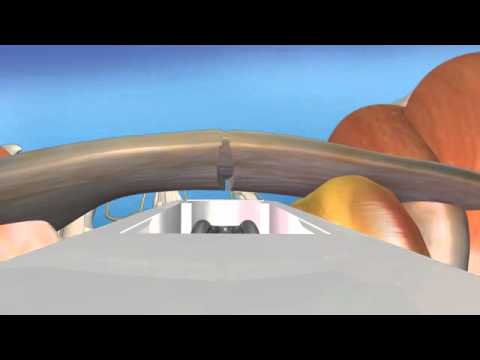
the same time now if you look here this is an animated picture of really what's going on this is a sack coming out with a root right out of the main ligament in the wrist usually from between the scaphoid and the lunate Bones called the scaal lunate ligament we go in and we
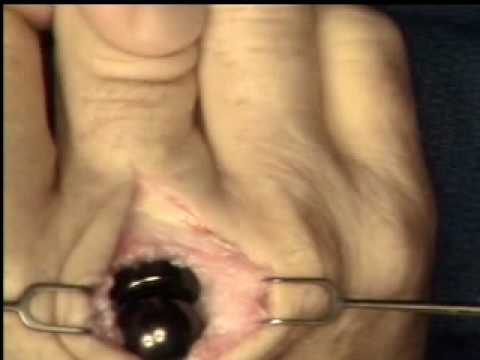
remove this cyst cutting around the base of it and take the cyst out as you can see it's missing here now let's take a look at actual patient undergoing this procedure you can see the wrist is bent prominence in the left hand side uh denoting a cyst and on the right hand
side you can see this gelatinous filled sa fluid filled sack that we go in and take out now at the same time we'll frequently stick in arthroscope a 2mm scope through that wound to look around it's not uncommon actually see a cartilage injury so after this surgery
assuming it's just a simple cyst removal we'll put the patient in a brace for about three to four days the patient comes back for the initial post-operative uh evaluation we take the splint off start you moving right away very few pain pills are even needed
following this simple 15minute procedure so after this after we start after you come back to the office we start rehabing you it's about a six week recovery start to finish before all the soreness dissipates and you're back to full activity there's about a 5%
recurrence rate so taking the cyst out 5% of the time it can come back for more on this condition and many other conditions please visit the Hanah RIS Institute website