Gamekeeper's Thumb - All You Need to Know
The transcript below is YouTube's automatic one. Anatomy terms are the words the machine heard, so a few of them are wrong. The practice is proofreading them.
- Video ID:
sxCryiOnYH4 - URL: https://www.youtube.com/watch?v=sxCryiOnYH4
- Uploaded: 2018-01-23
- Duration: 222s
- Views at capture: 102396
- Captions: YouTube auto-generated (no manual track published)
Description (channel copy)
Dr. Knight discusses Gamekeeper Thumb Injuries or injuries to the ulnar collateral ligament of the thumb. He discusses the conservative and surgical treatment for this condition. Dr. Knight performs gamekeeper's thumb treatment in the Dallas-Fort Worth area.
Transcript
hello I'm dr. John Knight today I want to talk to you about gamekeepers thumb gamekeepers thumb is an injury to the owner collateral ligament that's on the inside of the knuckle of the thumb it's a very important stabilizing ligament of the thumb and this can be usually
injured in two ways as far as the anatomy of the thumb this is the first metacarpal or the thumb metacarpal this is the proximal phalanx and this is the owner collateral ligament in this case most commonly it ruptures in the middle of the ligament just pups and there's
ligament on both sides of the tear and then there's less common where the actual ligament estate stays attached to the bone and a piece of bone pulls off in this case the proximal phalanx and it's so it's can usually happen one of two ways what are the causes of this
well most commonly it's from an impact shin injury or a torquing injury that pulls the thumb out such as this snowboarder impelling the thumb against the ground or frequently happens with ski pole injuries or any injury where the thumb gets bent outwards causing
that ligament to rupture so how is this diagnosed well it is first diagnosed with a careful example and specialist and so the first thing is to palpate that area to see if there's tenderness and swelling over that injure over that ligament and then to stress the ligament
may be uncomfortable for the patient sometimes they pay a local anesthetic can be administered to see if that joint opens up but with the MRI nowadays this really gives a great picture of what's going on with a ligament so we don't hesitate to get an MRI and you can see
it's called a stinner lesion in this case where this black structure that normally would attach here at the base of the proximal phalanx has been torn so badly that it's become trapped underneath a muscle here and that's called a stinner lesion that's a
significant lesion that we'll talk about usually ends up needing surgery but in more in a less severe case it may show the ligaments just thickened or swollen which would be a lower grade tear so the treatment of this conservatively is first if the if there's not a
standard lesion there's no instability of that joint is to go with a cast that this fiberglass cast called a thumb Spica it comes out to the last joint on the thumb you could even get a removable brace and then in severe cases such as hissed in early June you really need to
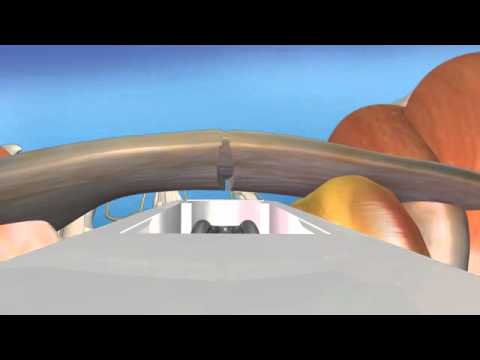
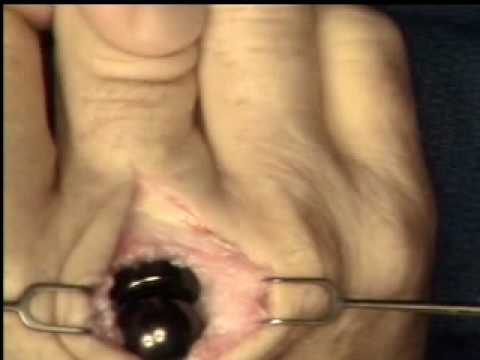
stabilize this joint to allow it to heal adequately and the overall healing time with the cast or with surgeries about six weeks but now there's a new anchor system by Arthur X it allowed that involves putting in two anchors much like a putting in a grommet into a
sheetrock wall to hold a picture this has thread that comes out of it and allows us to anchor that ligament back to the bone but now there's a there's an internal brace or splint that's built into this it's like a piece of tape and we double this across the joint it comes
out of this hole and then we put it into a hole here with another anchor what this allows particularly in the lead athlete is to start moving the thumb right away really start playing sports much quicker than we used to we used to have to immobilize you for six weeks and
then start therapy for several months too just to get back onto the end end of the game but now with this device you can actually start playing much sooner for more information on gamekeepers thumb or other upper extremity injuries or disorders please visit our website
hand and wrist institute comm thank you