De Quervain's (Stenosing Tenosynovitis) Surgery
The transcript below is YouTube's automatic one. Anatomy terms are the words the machine heard, so a few of them are wrong. The practice is proofreading them.
- Video ID:
ts-mowrAuZs - URL: https://www.youtube.com/watch?v=ts-mowrAuZs
- Uploaded: 2014-11-01
- Duration: 147s
- Views at capture: 174375
- Captions: YouTube auto-generated (no manual track published)
Description (channel copy)
http://www.handandwristinstitute.com/stenosing-tenosynovitis/ - Repetitive thumb and wrist use are very common nowadays, especially with the advent of smartphones and computer use. De Quervain’s tenosynovitis, also known as blackberry thumb or mommy thumb, is a natural development from this trend. The abductor tendons of the thumb can become inflamed as they pass through their tunnel while moving the thumb, which in turn can cause pain and discomfort, hallmarks of this condition.
Bracing is the most common primary treatment of this condition, as well as the prescription of anti-inflammatories to counteract the symptoms. In about 50% of cases, an injection of cortisone may improve patient symptoms, but should this prove ineffective, then a slightly more invasive procedure may be required. In a short procedure of about ten minutes, the patient is sedated and a single small incision is made along the inside of the wrist, where the thumb is, through which the tendon’s sheath is sliced open to relieve pressure and increase mobility and reduce pain. It is occasionally possible that the affected tendons pass through one or more sheathes and so when releasing them one must make sure to get all of them, or the surgery will be ineffective. Following the release, sutures are used to bring the skin back together.
After surgery, a splint is used to immobilize the affected area, and in three days, this splint is removed. Therapy will be initiated for four to six weeks, after which time full use should return to the extremity.
Transcript
Let's take a look at dquer vein surgery. Dquire veins tendinitis or mommy thumb is a very common condition that affects the hand and wrist. Let's take a look at the activities. Frequent activities such as lifting a heavy baby uh computer keyboard and mouse use and frequent
texting. All activities that can affect us dayto-day can cause this condition from repetitive thumb movement as you can see here. Let's look at the anatomy. The anatomy involves the the the extensor and abductor of the thumb that pulls the thumb away from the palm is
from this repetitive movement that can lead to friction within this tight tunnel or inflammation that can be cause considerable pain. So how do we treat this? Well, the first thing we're going to do is immobilize the thumb, put it at rest to let this inflammation reduce.
We'll add some anti-inflammatory medication such as ibuprofen. Another thing that can be effective if this does doesn't work and that frequently is necessary is a simple cet one-time cortisone shot into the sheath to reduce the inflammation. However, in
about 50% of cases though, the conservative treatment fails and we have to look at a minimally invasive surgical procedure through a small tiny incision that we're going to make on the thumb side of the wrist. And through that incision, we're going to go in and we're
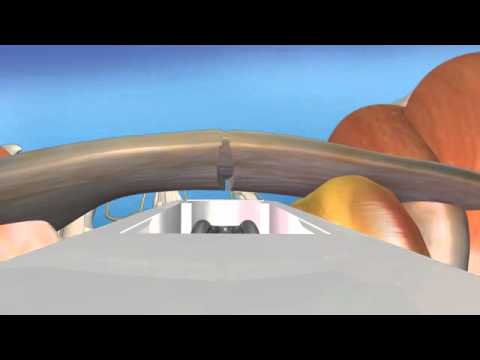
going to open up that sheath just letting the pressure off. This causes no limitation of function once we do this. uh you can see this sheath is open but in a in a significant portion of patients and it's critical the surgeon sees this there may be two compartments
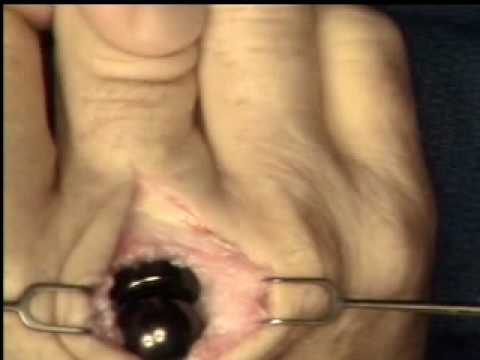
one around each of the tendons so it's important to go in and release all these compartments as you can see as we're going to open up the final sheath here now let's take a look at this in a real patient this is a templated surgical uh site that we're going to cut open and
we're going to open this up now we're going to go down as you can see this great magnified view right here the stars are actually the sheath that's been opened up and you can see the tendons running between this. Afterwards, we'll put a couple stitches
or sutures beneath the inh skin that subsequently dissolve. We'll put put you in a brace that will stay on uh for about 3 days. The patient then comes back to the office. We remove the brace and start range of motion right away. Highly effective surgery. Overall
recovery time is about four to six weeks to full activity. For more on this condition and many other conditions, please visit our website.